Dan Olinger

"If the Bible is true, then none of our fears are legitimate, none of our frustrations are permanent, and none of our opposition is significant."

Dan Olinger


Retired Bible Professor,

Bob Jones University

home / about / archive 

Subscribe via Email

Abraham, Part 5: Covenant

September 3, 2026 by Dan Olinger Leave a Comment

Part 1: Introduction | Part 2: Journey to Canaan | Part 3: Settlement | Part 4: Establishment

We are now in the central stage of Abraham’s life: the formal presentation and confirmation of the Covenant. This is the first of three major covenants executed in the Old Testament: the Abrahamic, the Mosaic (Ex 19.17ff), and the Davidic (2S 7.12ff). (A fourth, the New Covenant, is predicted in Jeremiah 31.31ff, but not executed until the Last Supper [Mt 26.28].)

As we’ve seen, the Abrahamic Covenant has been initially announced earlier, in Genesis 12, but we find the full statement and ratification here in Genesis 15. Commentator Kenneth Mathews (the New American Commentary) writes, “In its immediate context, the chapter depicts the patriarch as the recipient of a divine bequest, modeled on a royal gift, which follows on his encounter with the kings (chap. 14).”

The chapter introduces the Covenant topic with a conversation between Abram and God in which Abram reminds God that he still doesn’t have any offspring (Ge 15.1-6). In the first announcement of the Covenant, God told Abram that he would become a “great nation” (Ge 12.2), which certainly implies a large number of descendants, and the second announcement makes the idea more explicit with the “dust of the earth” analogy (Ge 13.16).

Now Abram observes that he still has no offspring (Ge 15.2-3). In fact, he has followed the cultural custom of legally adopting an adult male to provide care for the aging childless couple when they need it, in return for inheriting their estate (Ge 15.2-3). (This custom is attested in the Nuzi documents, which are dated in Abram’s time.) https://cojs.org/nuzi_archives/

I don’t see Abram’s question as unreasonable, or evidence of lack of faith; it’s been close to ten years since Genesis 12 (Ge 12.4; 16.3), and at age 85 Abram doesn’t know how much time he has left.

God responds by repeating his earlier promise and clarifying it: first, Abram’s offspring will indeed be biologically his (Ge 15.4), and second, God provides a second metaphor. He had said his seed would be like the dust of the earth (Ge 13.16); now he compares it to the stars (Ge 15.5). Keep in mind that there was no light pollution in those days; even without telescopes, Abram’s view of the heavens would present an astounding number. Any readers living in Death Valley, or North Korea, can confirm that.

What follows is one of the most important verses in the Bible for the doctrine of salvation: “And he believed in the LORD; and he counted it to him for righteousness” (Ge 15.6). Paul cites this verse as evidence that salvation has always been by faith, since here the Mosaic Law didn’t even exist (Ro 4.3ff; Ga 3.6-14).

Now comes the formal enactment of the Covenant (Ge 15.7-21). (Note the parallel language between Ge 15.7, initiating the Abrahamic Covenant, and Ex 20.2, initiating the Mosaic.) In a ceremony that seems strange to us, following God’s instruction (Ge 15.9), Abram slaughters several animals and cuts them in half (Ge 15.10), and God, in the form of a smoking lamp, walks between the pieces (Ge 15.17). In that culture this was the form of a solemn covenant; the parties would walk between the halves of the animals, with the implication that this kind of death will come to one who breaks the covenant (Jer 34.18-19).

Note that Abram does not walk between the animal pieces; only God does. God places himself under the threatened death penalty if he breaks the covenant. The point is clear: God cannot die; the covenant cannot be broken. We call this a monergistic covenant; only one of the parties is bound by it.

During this ceremony God prophesies the future. “God’s timescale for the fulfilment of his promises was a long one. Abram was losing patience that little had happened in the ten years … that had elapsed since the promise was first made, but God was thinking in terms of 400 years (13)” (Gordon Wenham, The New Bible Commentary, 72). This is a round number; the actual length of Israel’s stay in Egypt was 430 years (Ex 12.40).

God’s prediction of the exile in Egypt shows that it was always his intent, and here he gives the reason: he is giving the pagan Canaanites, who are already under a curse (Ge 9.25), a full four additional centuries to repent, demonstrating that he is “slow to anger” (Ps 103.8) and ameliorating the charge of genocide when the eradication of the Canaanites finally came.

Next time, Abram tries to help God fulfill the covenant.

Part 6: Ishmael. Not. | Part 7: Implemented | Part 8: Isaac Promised | Part 9: Certified at Sodom | Part 10: Certified in Gerar | Part 11: Fulfillment | Part 12: Preservation | Part 13: Continuation

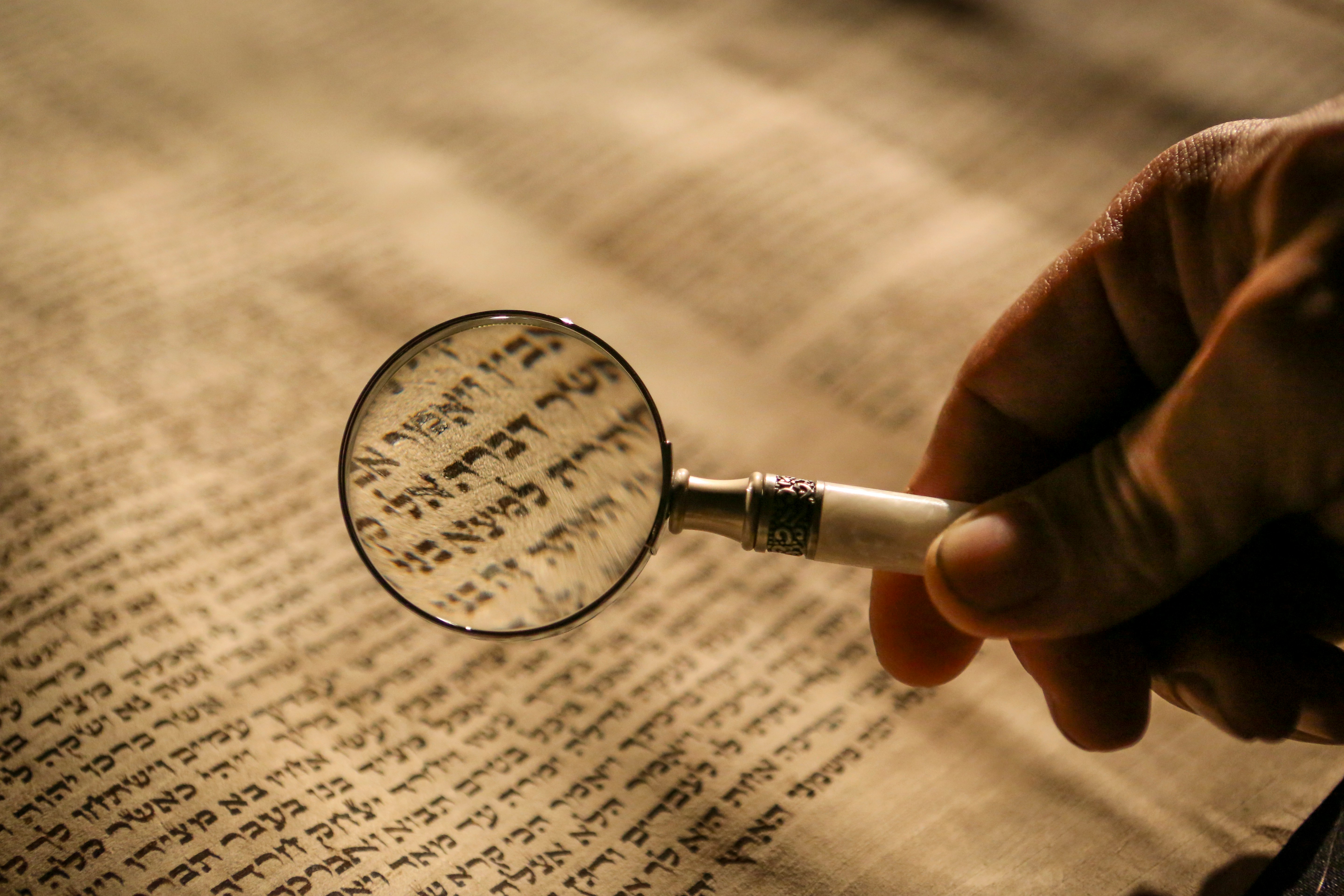
Photo by Mick Haupt on Unsplash

Filed Under: Bible, Theology Tagged With: Abraham, biography, Genesis, Old Testament

Abraham, Part 4: Establishment

August 31, 2026 by Dan Olinger Leave a Comment

Part 1: Introduction | Part 2: Journey to Canaan | Part 3: Settlement

Once Abram had settled in the land of Canaan, the next step in God’s covenant with him was to establish him there–to make him a force to be reckoned with. Genesis 14 is where he does that.

The first part of the chapter (Ge 14.1-16) shows God establishing Abram as a military presence–though his family is not a country, has no army, and, so far as we know, has no combat experience. In the area of the Dead Sea were five Canaanite “cities of the plain”: Sodom, Gomorrah, Admah, Zeboiim, and Bela / Zoar (Ge 14.2). Four eastern kings established dominance over these cities (Ge 14.1), which almost certainly meant forcing them to pay tribute. The names of these kings are not known from secular historical records, but their regions are: Shinar is in northern Mesopotamia; Ellasar is in southern Mesopotamia; Elam is east of Mesopotamia, part of modern Iran; Goiim could be a place name or simply a reference to “Gentiles.” (Tidal is a Hittite name.)

After twelve years of paying tribute, the Canaanite cities refused to continue (Ge 14.4), and the eastern kings came looking to put a stop to their rebellion (Ge 14.5).

Apparently these kings planned a larger invasion, establishing control over the surrounding area and thus increasing their tribute revenue (Ge 14.5-7). As this invasion advanced, the five cities set out to repel it (Ge 14.8-9).

There are a lot of place names in these few verses. In summary, the eastern kings invaded through modern Jordan, crossed south of the Dead Sea, and then proceeded west, to Kadesh Barnea on the western side of the Sinai Peninsula (Ge 14.5-7). The “Valley of Siddim” is said to be full of tar pits (Ge 14.10). The south end of the Dead Sea covers a region with such tar; the Greeks and Romans later called the region “Asphaltites.”

As we might expect, the eastern kings overwhelmed the five “kings”–effectively mayors–of the cities of the plain and plundered their cities (Ge 14.10-11). In theory, Abram didn’t have a dog in this fight, so to speak, until they looted Sodom, where his nephew Lot was living (Ge 14.12).

Once Abram heard of this personal disaster (Ge 14.13), he was going to act. Almost certainly motivated by God’s gift of the land as well as by his family connection, Abram teamed up with regional “confederates” (Ge 14.13) as well as his 318 “trained servants” (Ge 14.14)–a number nowhere near enough to take on such an invading force under ordinary circumstances–and chased the invaders from the south end of Canaan (Kadesh Barnea) to the north end (Dan, which would have been called Laish [Judg 18.29] at the time)(Ge 14.14).

Now Abram had standing in the land; the neighboring regions were going to recognize his power and treat him with respect.

The second part of the chapter (Ge 14.17-24) gives us several more pieces of information to give further meaning to Abram’s victory.

We read that the king of Sodom, certainly out of gratitude for Abram’s help, met Abram “in the valley of Shaveh” (Ge 14.17). Nobody knows where this was, but since Melchizedek, “king of Salem [Jerusalem]” (Ge 14.18), was right there, it may be a valley near that city (the Kidron?).

This Melchizedek (“my king is righteous”) has considerable importance in the biblical record. He was a “priest of the Most High God.” (This is the first use of the name “El Elyon” in the Scripture.) Now, this man was clearly Canaanite, probably Jebusite. How did he become a priest of the true God? We’re not told. (There’s a theory, based on Hebrews 7.3, that he was the preincarnate Christ. I’m quite sure that he was not.)

But he was a true priest–of an order superior to Levi’s (He 7.4-11)–and he apparently introduced the patriarch to this new name for God and blessed him in the name of that God (Ge 14.19-20).

It was after that–providentially–that the king of Sodom offered Abram a hefty reward for his exploits (Ge 14.21). In light of his earlier oath, and probably in light of the much greater blessing bestowed by Melchizedek, Abram turned it down (Ge 14.22-24).

Abram had once taken money from Pharaoh. Now he was beyond that.

And he had assurance from God, by experience, confirmed by a priest, that his God would give him the land, by force if necessary. He knew, as do we, that it was not his military skill that had given him the victory.

Next time, a new stage, and a new focus: The Covenant.

Part 5: Covenant | Part 6: Ishmael. Not. | Part 7: Implemented | Part 8: Isaac Promised | Part 9: Certified at Sodom | Part 10: Certified in Gerar | Part 11: Fulfillment | Part 12: Preservation | Part 13: Continuation

Photo by Mick Haupt on Unsplash

Filed Under: Bible, Theology Tagged With: Abraham, biography, Genesis, Old Testament

Abraham, Part 3: Settlement

August 27, 2026 by Dan Olinger Leave a Comment

Part 1: Introduction | Part 2: Journey to Canaan

With Abraham’s journey to Canaan and visit to Egypt now complete, we enter the second section of this first stage of his story—settlement in Canaan. This is the focus of Genesis 13.

There’s been speculation and allegorization in interpreting this passage: was Abraham’s bringing of Lot a violation of God’s command to leave his family? Does Abram’s trip to Egypt prefigure Mary and Joseph’s flight to Egypt? Did Abram hire Hagar while they were there?

We’re going to ignore all that and stick with what the passage says—since that’s what God has revealed and thus what he wants us to know.

The chapter begins by noting that Abram is now wealthy (Ge 13.2). This is, as we noted last time, evidence that God’s covenant promise of blessing has already begun. It also sets up the next step, providing a reason why Abram thought that he and Lot should go their separate ways.

The second observation about his return to Canaan is that he returned to his former altar near Bethel and worshiped (Ge 13.3-4). Despite his foolishness in Egypt, he has not left his desire to worship and obey the God who called him out of Ur. He’s in a good position to start his time in “the Promised Land.”

We all understand that Lot is very much a foil for Abram. He shows no spiritual interest; rather than counting himself a “stranger and pilgrim on the earth” (He 11.13), he is focused on where the opportunities and consequent prosperity are. “Lot headed for the good life” (NET Bible). Before the story is over, he’s going to be sitting in the gate of Sodom (implying that he’s on the city council) with apparent disregard for the danger the city is going to be to his family. Every member of his family will evidence the consequences of that danger.

The hired herdsmen of both Abram and Lot were quarreling (Ge 13.7), almost certainly over access to water and food for the animals.

And so he suggests to Lot that they divide the land between them (Ge 13.8). This too is an act of faith; there are Canaanites all around (Ge 13.7), and Abram sees the land as his.

There are areas of the land that compare to the Garden of Eden (Ge 13.10)! Lot grabs that, while the gettin’s good. The steady water of the Jordan will provide him with all he needs.

But there is ironic foreboding here. The text anticipates that Sodom and Gomorrah will be destroyed by fire (Ge 13.10).

Abram accedes to Lot’s choice–again, perhaps because he figures that all the land will eventually belong to him anyway–thereby demonstrating a very different spirit from the fear that drove him in Egypt.

The chapter ends with God restating his covenant with Abram. It’s tempting to think that he did this because he was pleased with the spiritual development Abram has just displayed. But the text gives no indication of that. In his first presentation of the covenant (Ge 12.1-3), there is no indication that it is conditional, unless we read verse 1, Abram’s leaving Ur, as the condition. Even if we assume that, Abram’s having obeyed means that the condition has been met, and the covenant is now fully in effect.

In short, God repeats the covenant not because of how Abram is behaving, but because God keeps his promises.

God begins by telling Abram to “lift up your eyes” (Ge 13.14)–what Lot had done earlier (Ge 13.10), but without Abram’s faith. As far as Abram can see in every direction–and farther, as the land was divided by Joshua–the land would be his, including the east, which Lot had just acquired.

In this second statement God expands what he had said in chapter 12. The land promise is now “forever” (Ge 13.15). Instead of a “great nation” (Ge 12.2), now his descendants will be innumerable (Ge 13.16).

Abram now settles in the land. He locates at the “oak of Mamre,” which scholars believe is about 20 miles south or southwest of Jerusalem. The passage mentions Hebron, which may not have existed as a city in Abram’s day (it did exist when Moses was writing this account), but which is where Abraham’s grave is today.

Next time: Abram becomes a force to be reckoned with.

Part 4: Establishment | Part 5: Covenant | Part 6: Ishmael. Not. | Part 7: Implemented | Part 8: Isaac Promised | Part 9: Certified at Sodom | Part 10: Certified in Gerar | Part 11: Fulfillment | Part 12: Preservation | Part 13: Continuation

Photo by Mick Haupt on Unsplash

Filed Under: Bible, Theology Tagged With: Abraham, biography, Genesis, Old Testament

Abraham, Part 2: Journey to Canaan

August 24, 2026 by Dan Olinger Leave a Comment

Part 1: Introduction

As we’ve noted, the first stage of Abraham’s life as recorded in Genesis is the Call from God to leave his homeland and travel to a new land: Canaan (Ge 12-14). The first chapter of this account consists of that initial call and Abram’s immediate journey.

This account comes immediately on the heels of the Tower of Babel, a deliberate defiance of God’s command to scatter and populate the earth. Abram’s immediate obedience is in stark contrast.

God’s call to Abram is clear: he is to leave his relatives and his homeland and go to an unspecified place “that I will show you” (Ge 12.1). His next words are prophecy, not command; they describe the fruits of obedience: Abram will have many descendants, who will be blessed, and who will bless the whole world (Ge 12.2-3). This promise will be repeated and expanded in upcoming chapters; we call it the Abrahamic Covenant, which promises a homeland, a posterity, and a universal blessing. Commentator Harold Willmington has characterized this as “soil, a seed, and a Saviour.” This is literally a global promise, the extent of which Abram could not possibly have fathomed.

This promise sets up the theme of the rest of Scripture. In contrast to the builders of Babel, Abram obeys, and God will set in place a plan to rescue mankind from its own rebellion, destroy Babylon (Re 14.8; 18.2), and restore Eden (Re 21.1-22.5).

Global, indeed.

I should note that Abram’s family has been introduced a paragraph earlier, at the end of chapter 11. There we learn two important things: that Sarai is barren, and that Abram’s father had already moved them from Ur, their home, to Haran, enroute to Canaan. This confusion is cleared up by the fact that the next paragraph is a flashback; the KJV and NKJV, as well as a footnote in the ESV, read the verb in verse 1 as perfect: “God had [earlier] said.” Thus the call comes in Ur, and the family members start toward Canaan. Their journey is punctuated by a stop partway, in Haran, on the Fertile Crescent.

The New Testament says that when he left Ur, he went “not knowing whither he went” (He 11.8). The Lord led them along, first to Haran for a time, and then eventually to Canaan. This was a journey of faith.

If we look closely at the numbers, we note that Abram’s father, Terah, was 70 when Abram was born (Ge 11.26) and that he died when he was 205–when Abram would have been 135. But the account says that Abram left Haran for Canaan when he was 75 (Ge 12.4)–so he must have left 60 years before his father died. Did Terah refuse to go along? Why? We don’t know. But Abram is following the Lord’s leadership, not his father’s. He needs to go.

So he gathers his closest family–his wife, and his nephew Lot (Ge 12.5)–as well as his servants and his growing possessions. (The blessing has apparently already started.) And he heads for Canaan. When he arrives, he surveys the land, arriving at Shechem (Ge 12.6), where the Lord again promises him both the land and a progeny to dwell in it (Ge 12.7). He proceeds southward to the area of Bethel (actually given that name by his grandson Jacob years later; the author of this account, Moses, is writing from a later perspective, when his readers would be used to calling the place by its later name) (Ge 12.8). In both of these places he builds altars, worshiping the Lord who is guiding him, and likely indicating his faith in the promises by “planting his flag,” so to speak.

Famine arrives (Ge 12.10). In such times, looking to Egypt, with its reliable water source in the Nile, was common. God later told Isaac not to go to Egypt (Ge 26.2); yet Jacob took his family to Egypt at Joseph’s insistence and with God’s apparent blessing (Ge 45.16ff).

Should Abram have left the land where he had built the altars, or not?

In any case, we all know the story of Abram’s fear of Pharaoh and his nonsensical lie about his beautiful wife, thereby putting her at risk of joining Pharaoh’s harem. He does not appear to be acting in faith any longer.

But God protects him–blesses him–keeping his promises despite Abram’s apparent lack of faith.

God is like that.

Next time: back to Canaan, and settlement.

Part 3: Settlement | Part 4: Establishment | Part 5: Covenant | Part 6: Ishmael. Not. | Part 7: Implemented | Part 8: Isaac Promised | Part 9: Certified at Sodom | Part 10: Certified in Gerar | Part 11: Fulfillment | Part 12: Preservation | Part 13: Continuation

Photo by Mick Haupt on Unsplash

Filed Under: Bible, Theology Tagged With: Abraham, biography, Genesis, Old Testament

Abraham, Part 1: Introduction

August 20, 2026 by Dan Olinger Leave a Comment

I’d like to spend the next few posts–maybe 10 or 12–on a theological look at the life of Abraham as recounted in Genesis 12-25. As we’ll see, he’s a foundational character in Scripture, and there’s a lot to learn from him–about history, about philosophy of life, about making and recovering from mistakes, and most of all about God.

I’ve begun by saying he’s a foundational character. Let’s demonstrate that.

He is, of course, an Old Testament character, whose entire life narrative is in the first book of the Bible; but as a measure of his long-term significance, I’d like to survey what the New Testament says about him.

He’s mentioned in all four Gospels, Acts, Paul, Peter, James, and Hebrews.

He’s identified as the start of God’s covenant with Israel (Lk 1.55; He 6.13-15); first-century Jews are called “sons” or “daughters’ of Abraham (Lk 13.16; 19.9; Ac 13.26; Ro 11.1; 2Co 11.22; He 2.16). He permeates Stephen’s sermonic history of the nation (Ac 7.2, 8, 16, 32). He is called the father of Israel’s great hope, the Messiah (Mt 1.1-2, 17; Lk 3.34), and he is said to point to that same Messiah; Jesus states that directly (Jn 8.52-58), and Peter emphasizes it as he introduces the New Covenant at Pentecost (Ac 3.13-25). He represents the Levitical priesthood, which of course is descended from his great-grandson, and which Christ, as a priest after the order of Melchizedek, supersedes (He 7.1-9).

His relationship with God is exemplary for all believers; he comes to God by faith, not works (Ro 4.1-16; Ga 3.6-18; He 11.8-17; Jam 2.21-23), thereby rendering physical descent relatively unimportant (Mt 3.9; Lk 3.8; Jn 8.33-40; Ro 9.7; Ga 4.22). Consequently, he represents all who come to God (Mt 8.11; Lk 13.28; Lk 16.23-30).

We can organize Abraham’s life into several stages. When we meet him, he is a Mesopotamian, apparently an idol worshiper (Jos 24.15), whom God calls to “a land that I will show you” (Gen 12.1). We might call this stage The Call (Ge 12-14).

The lengthiest stage begins with a divine covenant (ch 15), which Abram (as he’s called at the time) misguidedly tries to assist by having a son through his wife’s servant (ch 16). After a formal initiation through circumcision (ch 17), the covenant is fulfilled in the birth and preservation of Isaac (ch 18-22). We’ll call this stage, obviously, The Covenant.

Finally, there’s a denouement: he acquires a burial place (ch 23), acquires a wife for Isaac in Rebekah (ch 24), and sees his family tree greatly expanded (ch 25). All of this assures us that God’s covenant promises for him will be fulfilled.

He will show us a typical man, a sinner, inclined to fail despite his many strengths and advantages. But in the end he is characterized by a single simple trait: faith.

He believed. As can we, as human and messy as we are.

Next time: Call and Response.

Part 2: Journey to Canaan | Part 3: Settlement | Part 4: Establishment | Part 5: Covenant | Part 6: Ishmael. Not. | Part 7: Implemented | Part 8: Isaac Promised | Part 9: Certified at Sodom | Part 10: Certified in Gerar | Part 11: Fulfillment | Part 12: Preservation | Part 13: Continuation

Photo by Mick Haupt on Unsplash

Filed Under: Bible, Theology Tagged With: Abraham, biography, Genesis, Old Testament

On Ministry, Excursus: Paul after Acts

July 30, 2026 by Dan Olinger 2 Comments

Part 1: Introduction | Part 2: Accessing the Enablement | Part 3: The Offices | Part 4: The Qualities | Part 5: Case Studies | Part 6: Contentment | Part 7: Loyalty | Part 8: Commitment | Part 9: Endurance | Part 10: Summary

In Part 9 of this series I raised the issue of the outcome of Paul’s hearing before Caesar after the end of the book of Acts. As promised, I’m going to take this post to lay out my thinking on that question.

We know that every Roman citizen–and Paul was one (Ac 22.28)–had the right to appeal directly to Caesar for justice. Paul did that when he saw that he was not going to get a fair trial in Judea (Ac 25.11).

Now, Caesar is a Very Busy Man, and one who holds the imperium, and with it the absolute power of life and death. You don’t demand his time unless you’re pretty sure you have a case. As a lifelong citizen, Paul knew how the system worked, and he was no idiot. He had a good case.

But there’s considerably more evidence than this.

While he is under house arrest in Rome, awaiting the hearing of his appeal (Ac 28.30), he wrote the four “prison epistles” (Philemon, Colossians, Ephesians, and Philippians, probably in that order). In those epistles he expresses optimism about his prognosis; he makes plans to visit Philemon after his release (Phm 22) and to visit Philippi (Php 1.25; 2.24). These comments likely came toward the beginning and then toward the end of his two-year imprisonment, respectively; his outlook was likely consistent throughout, despite the delay.

Throughout the arrest process, the Roman officials consistently see no merit in the charge by the Jewish leaders. The arresting officer, Claudius Lysias, told the procurator, Felix, that Paul was not “worthy of death or [even] bonds” (Ac 23.29). Felix kept him in bonds, but apparently only in hopes of receiving a bribe (Ac 24.26), and Festus, his successor, expressed puzzlement as to how he was to explain to Caesar any sensible reason for Paul’s initial arrest (Ac 25.13-21).

While it’s true that Caesar–Nero–famously went cuckoo for Cocoa Puffs and initiated a violent and broad persecution of Christians, that came later, apparently when he needed to find someone to blame for his inept handling of–his “fiddling” during–the burning of Rome in AD 64. Paul’s appeal came to him four years before that. In fact, about that time–AD 60–there was a release of a group of Jewish priests under Nero (cf. Josephus, Vita, paragraph 3; Schaff, History of the Christian Church, 1.33.6).

As we’ve noted already, 2 Timothy 4.16-17 sounds very much like a recounting of his appeal hearing and acquittal. Given the evidence already cited, it’s hard for me to believe that the hearing took more than about 15 minutes. We know that earlier, in Corinth, the procurator Gallio had dismissed a similar charge against Paul without even hearing his defense (Ac 18.12-17). There’s hardly any greater way for a judge to indicate the weakness of a plaintiff’s case than that.

Finally, there’s a broad and consistent tradition in the church fathers that Paul traveled to and preached in Spain, a significant event that is completely unaccounted for in Acts:

  • Clement of Rome (AD 80-140) writes that Paul “reached the farthest bounds of the West,” or Gibraltar (1Cl 5.6);
  • the Muratonian Canon (AD 170-200) notes that Luke omitted “the journey of Paul, when he went from the city (Rome) to Spain” (MC 37);
  • Eusebius (AD 263-339), the “father of church history,” writes, “After he had made his defense it is said that the apostle was sent again upon the ministry of preaching, and that upon coming to the same city a second time he suffered martyrdom” (Eccles. Hist. 2.22.2);
  • Cyril of Jerusalem (AD 318-386) writes that Paul “carried the earnestness of his preaching as far as Spain” (Catechism 17.26);
  • Chrysostom (AD 347-407) preached, “After he had been in Rome, he returned to Spain” (Homily X on 2 Timothy 4.9-13, verse 20).

Parallel to this evidence regarding a Spain journey are several references in the Pastorals, which I think were written after Nero released him, that describe him going places and doing things that are also not accounted for in Acts: Paul’s traveling from Ephesus to Macedonia without Timothy (1Ti 1.3); his leaving Titus in Crete (Ti 1.5); wintering at Nicopolis (Ti 3.12); leaving Trophimus sick at Miletus (2Ti 4.20).

I should note that I am indebted to the research of Otto F. Meinardus in The Biblical Archaeologist (June 1978) for much of the information about patristic references to Paul’s travel to Spain. The link is behind a paywall, but a library with a subscription to JSTOR will have access.

Further, Leon Morris has a good summary of these arguments in his Introduction to the New Testament .

Photo by Mélyna Côté on Unsplash

Filed Under: Bible Tagged With: Acts, background, biography, New Testament, Paul

  • « Previous Page
  • 1
  • 2
  • 3