
Part 1: Introduction | Part 2: Journey to Canaan | Part 3: Settlement | Part 4: Establishment | Part 5: Covenant | Part 6: Ishmael. Not.
I’ve suggested that Abraham has acted in good faith. But it turns out that he has not done the right thing. I suspect we’ve all experienced something like that.
God (here called YHWH, his personal, relational name), whose will is always done, acts to enlighten him, in the way he usually deals with him: direct revelation. And what a revelation it is.
God refers to himself as El Shaddai, “Almighty God.” He can do anything; he was not stymied by Sarai’s age, and he doesn’t need Abram’s help.
Commentator Gordon Wenham notes that this chapter is a chiasmus; God’s five speeches here are arranged in an ABCBA pattern:
A: Everlasting Covenant (Ge 17.1-2)
B: Renaming of Abram (Ge 17.4-8)
C: Sign of the Covenant: Circumcision (Ge 17.9-14)
B: Renaming of Sarai (Ge 17. 15-16)
A: Everlasting Covenant (Ge 17.19-21)
This is a thorough and artful restatement and implementation of the Covenant.
We’ve noted already that the Covenant is monergistic; God alone walks between the divided corpses. But he does expect something of Abram: “walk before me, and be perfect,” or blameless, spotless (Ge 17.1). How will he do this? By faith (He 11.8-10), as do we all. And he indicates that faith by worship (Ge 17.3).
To indicate Abrahm’s expanded role under the Covenant, God gives him a new name: Abraham, “father of a multitude” (Ge 17.5). And he reiterates the promises: many descendants (Ge 17.6), seed (singular!) (Ge 17.7; cf Ga 3.16), land (Ge 17.8).
Now God gives the sign of the Covenant: circumcision. This does seem odd to us, not to mention bringing up awkward questions in middle school Bible classes. Why circumcision?
The Bible speaks to this. I should note that circumcision was practiced across the Near East, but here God gives it a new significance. As circumcision is the cutting off and putting away of a piece of flesh, a visible part of the man’s generative organ, it serves as an external sign of an internal reality: the putting away of “the flesh,” our tendency to entertain what Paul calls “the old man,” our former selves, our fallen nature (Co 2.11). Note that the external type is not sufficient; if it doesn’t reflect an inner reality, it is meaningless. To an Israelite man it served as a daily reminder of his special standing before God and his responsibility to live it out.
Now God turns to Sarai and refreshes her name. Both “Sarai” and Sarah” (Ge 17.15) mean “princess,” but the latter is a newer form, by which God is reminding her of her standing in the Covenant and her role as the biological mother of the promised son (Ge 17.16).
Abram laughs. Most interpreters see this as a sign of astonishment and joy rather than the unbelief that we’ll soon see in Sarah. But I’m not so sure of that. Despite the repeated promise of Isaac, Abraham still wishes that the Covenant child could be Ishmael, whom he loves, of course, as his son (Ge 17.18).
But God’s plan is that Isaac will be the heir (Ge 17.19),. God makes a play on words here; remember the meaning of Ishmael’s name? “God hears.” And God says, “I have heard you” (Ge 17.20). Ishmael will prosper, having twelve princes (Ge 17.20; cf Ge 25.13-15). God knows Abraham’s fears, and he hears even misguided prayers.
This is now the fourth statement of the Covenant. What’s new here? Royal descendants (Ge 17.6, 16);Sarah as biological mother; and the land as an everlasting possession.
Next time, the story continues as the spotlight turns to Isaac.
Part 8: Isaac Promised | Part 9: Certified at Sodom | Part 10: Certified in Gerar | Part 11: Fulfillment | Part 12: Preservation | Part 13: Continuation
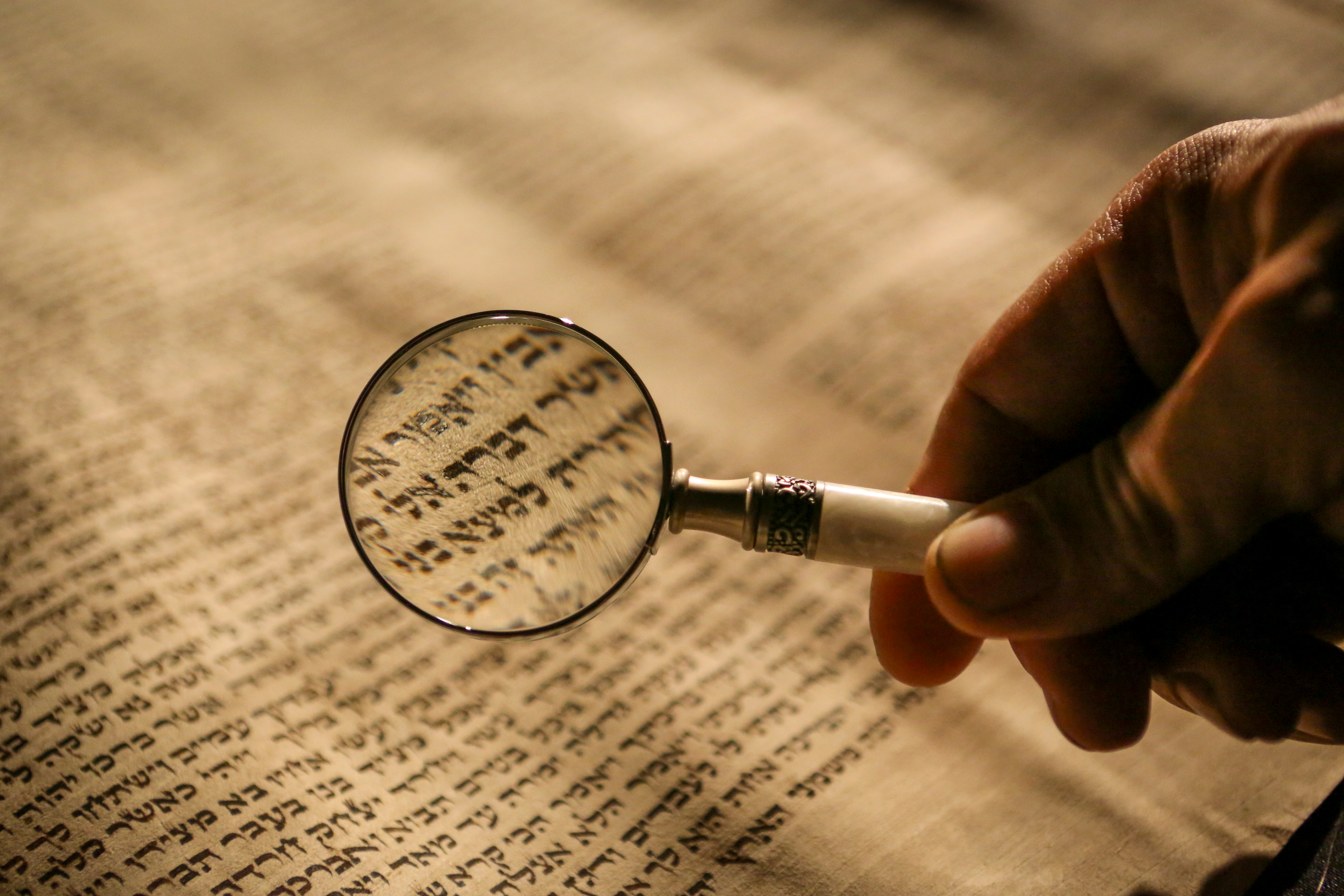
Photo by Mick Haupt on Unsplash
Leave a reply. Keep it clean.