Dan Olinger

"If the Bible is true, then none of our fears are legitimate, none of our frustrations are permanent, and none of our opposition is significant."

Dan Olinger


Retired Bible Professor,

Bob Jones University

home / about / archive 

Subscribe via Email

Abraham, Part 3: Settlement

August 27, 2026 by Dan Olinger Leave a Comment

Part 1: Introduction | Part 2: Journey to Canaan

With Abraham’s journey to Canaan and visit to Egypt now complete, we enter the second section of this first stage of his story—settlement in Canaan. This is the focus of Genesis 13.

There’s been speculation and allegorization in interpreting this passage: was Abraham’s bringing of Lot a violation of God’s command to leave his family? Does Abram’s trip to Egypt prefigure Mary and Joseph’s flight to Egypt? Did Abram hire Hagar while they were there?

We’re going to ignore all that and stick with what the passage says—since that’s what God has revealed and thus what he wants us to know.

The chapter begins by noting that Abram is now wealthy (Ge 13.2). This is, as we noted last time, evidence that God’s covenant promise of blessing has already begun. It also sets up the next step, providing a reason why Abram thought that he and Lot should go their separate ways.

The second observation about his return to Canaan is that he returned to his former altar near Bethel and worshiped (Ge 13.3-4). Despite his foolishness in Egypt, he has not left his desire to worship and obey the God who called him out of Ur. He’s in a good position to start his time in “the Promised Land.”

We all understand that Lot is very much a foil for Abram. He shows no spiritual interest; rather than counting himself a “stranger and pilgrim on the earth” (He 11.13), he is focused on where the opportunities and consequent prosperity are. “Lot headed for the good life” (NET Bible). Before the story is over, he’s going to be sitting in the gate of Sodom (implying that he’s on the city council) with apparent disregard for the danger the city is going to be to his family. Every member of his family will evidence the consequences of that danger.

The hired herdsmen of both Abram and Lot were quarreling (Ge 13.7), almost certainly over access to water and food for the animals.

And so he suggests to Lot that they divide the land between them (Ge 13.8). This too is an act of faith; there are Canaanites all around (Ge 13.7), and Abram sees the land as his.

There are areas of the land that compare to the Garden of Eden (Ge 13.10)! Lot grabs that, while the gettin’s good. The steady water of the Jordan will provide him with all he needs.

But there is ironic foreboding here. The text anticipates that Sodom and Gomorrah will be destroyed by fire (Ge 13.10).

Abram accedes to Lot’s choice–again, perhaps because he figures that all the land will eventually belong to him anyway–thereby demonstrating a very different spirit from the fear that drove him in Egypt.

The chapter ends with God restating his covenant with Abram. It’s tempting to think that he did this because he was pleased with the spiritual development Abram has just displayed. But the text gives no indication of that. In his first presentation of the covenant (Ge 12.1-3), there is no indication that it is conditional, unless we read verse 1, Abram’s leaving Ur, as the condition. Even if we assume that, Abram’s having obeyed means that the condition has been met, and the covenant is now fully in effect.

In short, God repeats the covenant not because of how Abram is behaving, but because God keeps his promises.

God begins by telling Abram to “lift up your eyes” (Ge 13.14)–what Lot had done earlier (Ge 13.10), but without Abram’s faith. As far as Abram can see in every direction–and farther, as the land was divided by Joshua–the land would be his, including the east, which Lot had just acquired.

In this second statement God expands what he had said in chapter 12. The land promise is now “forever” (Ge 13.15). Instead of a “great nation” (Ge 12.2), now his descendants will be innumerable (Ge 13.16).

Abram now settles in the land. He locates at the “oak of Mamre,” which scholars believe is about 20 miles south or southwest of Jerusalem. The passage mentions Hebron, which may not have existed as a city in Abram’s day (it did exist when Moses was writing this account), but which is where Abraham’s grave is today.

Next time: Abram becomes a force to be reckoned with.

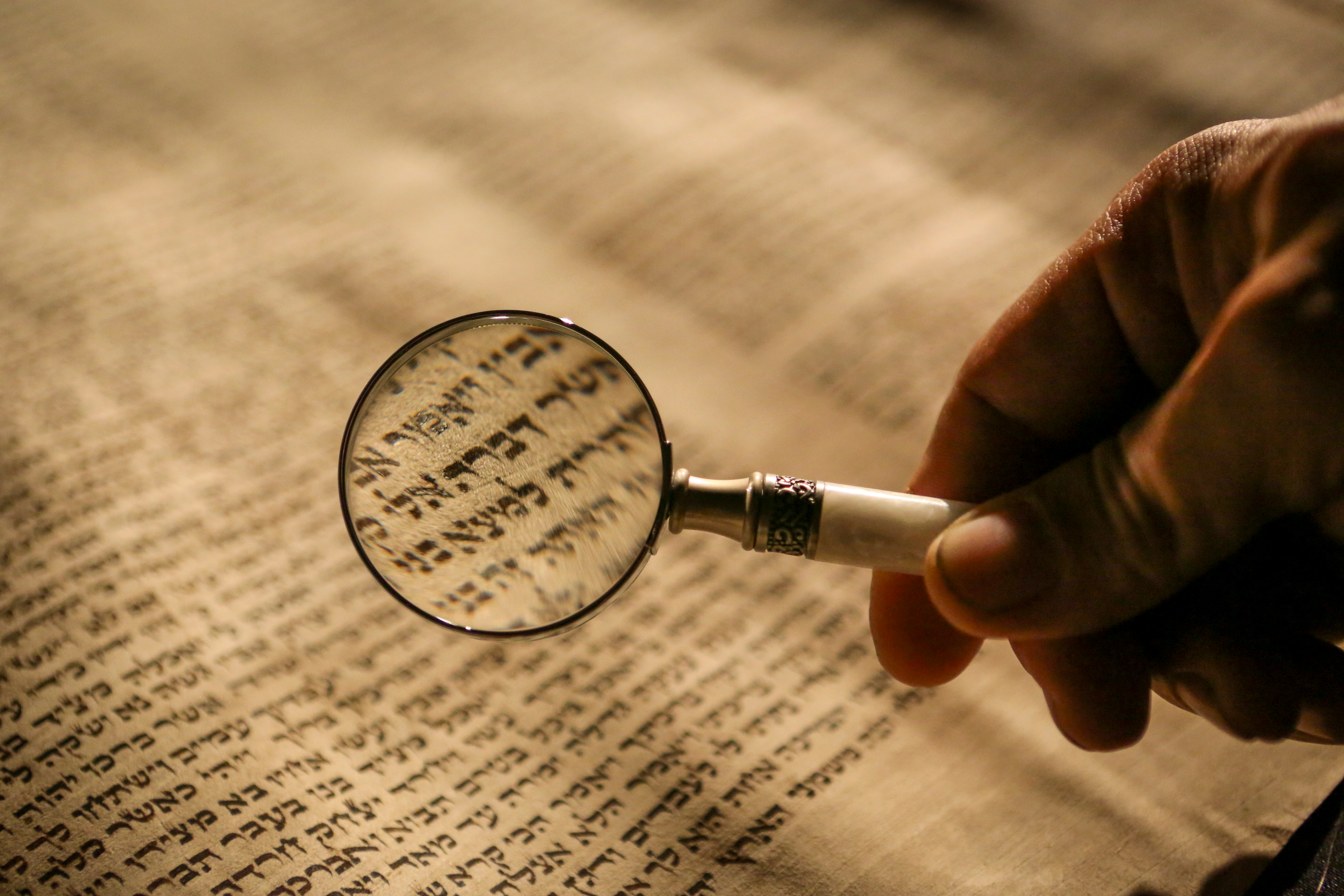
Photo by Mick Haupt on Unsplash

Filed Under: Bible, Theology Tagged With: Abraham, biography, Genesis, Old Testament

Abraham, Part 2: Journey to Canaan

August 24, 2026 by Dan Olinger Leave a Comment

Part 1: Introduction

As we’ve noted, the first stage of Abraham’s life as recorded in Genesis is the Call from God to leave his homeland and travel to a new land: Canaan (Ge 12-14). The first chapter of this account consists of that initial call and Abram’s immediate journey.

This account comes immediately on the heels of the Tower of Babel, a deliberate defiance of God’s command to scatter and populate the earth. Abram’s immediate obedience is in stark contrast.

God’s call to Abram is clear: he is to leave his relatives and his homeland and go to an unspecified place “that I will show you” (Ge 12.1). His next words are prophecy, not command; they describe the fruits of obedience: Abram will have many descendants, who will be blessed, and who will bless the whole world (Ge 12.2-3). This promise will be repeated and expanded in upcoming chapters; we call it the Abrahamic Covenant, which promises a homeland, a posterity, and a universal blessing. Commentator Harold Willmington has characterized this as “soil, a seed, and a Saviour.” This is literally a global promise, the extent of which Abram could not possibly have fathomed.

This promise sets up the theme of the rest of Scripture. In contrast to the builders of Babel, Abram obeys, and God will set in place a plan to rescue mankind from its own rebellion, destroy Babylon (Re 14.8; 18.2), and restore Eden (Re 21.1-22.5).

Global, indeed.

I should note that Abram’s family has been introduced a paragraph earlier, at the end of chapter 11. There we learn two important things: that Sarai is barren, and that Abram’s father had already moved them from Ur, their home, to Haran, enroute to Canaan. This confusion is cleared up by the fact that the next paragraph is a flashback; the KJV and NKJV, as well as a footnote in the ESV, read the verb in verse 1 as perfect: “God had [earlier] said.” Thus the call comes in Ur, and the family members start toward Canaan. Their journey is punctuated by a stop partway, in Haran, on the Fertile Crescent.

The New Testament says that when he left Ur, he went “not knowing whither he went” (He 11.8). The Lord led them along, first to Haran for a time, and then eventually to Canaan. This was a journey of faith.

If we look closely at the numbers, we note that Abram’s father, Terah, was 70 when Abram was born (Ge 11.26) and that he died when he was 205–when Abram would have been 135. But the account says that Abram left Haran for Canaan when he was 75 (Ge 12.4)–so he must have left 60 years before his father died. Did Terah refuse to go along? Why? We don’t know. But Abram is following the Lord’s leadership, not his father’s. He needs to go.

So he gathers his closest family–his wife, and his nephew Lot (Ge 12.5)–as well as his servants and his growing possessions. (The blessing has apparently already started.) And he heads for Canaan. When he arrives, he surveys the land, arriving at Shechem (Ge 12.6), where the Lord again promises him both the land and a progeny to dwell in it (Ge 12.7). He proceeds southward to the area of Bethel (actually given that name by his grandson Jacob years later; the author of this account, Moses, is writing from a later perspective, when his readers would be used to calling the place by its later name) (Ge 12.8). In both of these places he builds altars, worshiping the Lord who is guiding him, and likely indicating his faith in the promises by “planting his flag,” so to speak.

Famine arrives (Ge 12.10). In such times, looking to Egypt, with its reliable water source in the Nile, was common. God later told Isaac not to go to Egypt (Ge 26.2); yet Jacob took his family to Egypt at Joseph’s insistence and with God’s apparent blessing (Ge 45.16ff).

Should Abram have left the land where he had built the altars, or not?

In any case, we all know the story of Abram’s fear of Pharaoh and his nonsensical lie about his beautiful wife, thereby putting her at risk of joining Pharaoh’s harem. He does not appear to be acting in faith any longer.

But God protects him–blesses him–keeping his promises despite Abram’s apparent lack of faith.

God is like that.

Next time: back to Canaan, and settlement.

Photo by Mick Haupt on Unsplash

Filed Under: Bible, Theology Tagged With: Abraham, biography, Genesis, Old Testament

Abraham, Part 1: Introduction

August 20, 2026 by Dan Olinger Leave a Comment

I’d like to spend the next few posts–maybe 10 or 12–on a theological look at the life of Abraham as recounted in Genesis 12-25. As we’ll see, he’s a foundational character in Scripture, and there’s a lot to learn from him–about history, about philosophy of life, about making and recovering from mistakes, and most of all about God.

I’ve begun by saying he’s a foundational character. Let’s demonstrate that.

He is, of course, an Old Testament character, whose entire life narrative is in the first book of the Bible; but as a measure of his long-term significance, I’d like to survey what the New Testament says about him.

He’s mentioned in all four Gospels, Acts, Paul, Peter, James, and Hebrews.

He’s identified as the start of God’s covenant with Israel (Lk 1.55; He 6.13-15); first-century Jews are called “sons” or “daughters’ of Abraham (Lk 13.16; 19.9; Ac 13.26; Ro 11.1; 2Co 11.22; He 2.16). He permeates Stephen’s sermonic history of the nation (Ac 7.2, 8, 16, 32). He is called the father of Israel’s great hope, the Messiah (Mt 1.1-2, 17; Lk 3.34), and he is said to point to that same Messiah; Jesus states that directly (Jn 8.52-58), and Peter emphasizes it as he introduces the New Covenant at Pentecost (Ac 3.13-25). He represents the Levitical priesthood, which of course is descended from his great-grandson, and which Christ, as a priest after the order of Melchizedek, supersedes (He 7.1-9).

His relationship with God is exemplary for all believers; he comes to God by faith, not works (Ro 4.1-16; Ga 3.6-18; He 11.8-17; Jam 2.21-23), thereby rendering physical descent relatively unimportant (Mt 3.9; Lk 3.8; Jn 8.33-40; Ro 9.7; Ga 4.22). Consequently, he represents all who come to God (Mt 8.11; Lk 13.28; Lk 16.23-30).

We can organize Abraham’s life into several stages. When we meet him, he is a Mesopotamian, apparently an idol worshiper (Jos 24.15), whom God calls to “a land that I will show you” (Gen 12.1). We might call this stage The Call (Ge 12-14).

The lengthiest stage begins with a divine covenant (ch 15), which Abram (as he’s called at the time) misguidedly tries to assist by having a son through his wife’s servant (ch 16). After a formal initiation through circumcision (ch 17), the covenant is fulfilled in the birth and preservation of Isaac (ch 18-22). We’ll call this stage, obviously, The Covenant.

Finally, there’s a denouement: he acquires a burial place (ch 23), acquires a wife for Isaac in Rebekah (ch 24), and sees his family tree greatly expanded (ch 25). All of this assures us that God’s covenant promises for him will be fulfilled.

He will show us a typical man, a sinner, inclined to fail despite his many strengths and advantages. But in the end he is characterized by a single simple trait: faith.

He believed. As can we, as human and messy as we are.

Next time: Call and Response.

Photo by Mick Haupt on Unsplash

Filed Under: Bible, Theology Tagged With: Abraham, biography, Genesis, Old Testament