Dan Olinger

"If the Bible is true, then none of our fears are legitimate, none of our frustrations are permanent, and none of our opposition is significant."

Dan Olinger


Retired Bible Professor,

Bob Jones University

home / about / archive 

Subscribe via Email

Archives for October 2026

Moses, Part 2: Exile

October 12, 2026 by Dan Olinger Leave a Comment

Part 1: Youth

The boy Moses, prince of Egypt, has great advantages growing up in the royal family. But as he is commencing his adulthood, he displays a virtue marred by a character flaw.

He knows, of course, that he is a Hebrew; his adoptive mother knew that from the beginning (Ex 2.6), and it seems unlikely that she would never have told him. Further, this assumption helps explain his actions in this episode.

He goes out to see “his brethren” (Ex 2.11), and he sees one of them being abused by an Egyptian taskmaster. His response is immediate: he kills the Egyptian (Ex 2.12).

That’s interesting, first because the taskmaster is likely physically fit and carrying some sort of weapon. Moses was thus probably highly fit and skilled in physical combat.

But he’s also not good at controlling his temper.

That may have been a consequence of his privileged upbringing, or it may have been a natural inclination. But given the consequences of his action–effectively expulsion from the royal family–it indicates a serious lack of self-control.

Now, Moses is writing this account; it is genuinely an autobiography, a retrospective. As he writes, he knows how his life is going to play out, particularly in the ways God is going to work with him. By the fourth of the five books that make up this story, Moses is going to be identified as “very meek, above all the men which were upon the face of the earth” (Num 12.3). Now, there’s an active discussion about whether Moses himself wrote this sentence, or it was added by a later editor, but that’s beside the point. Meekness is self-control; and this man, who started out by murdering an Egyptian in anger, is eventually going to be very different. God will do that, and he will do it through hard, hard times (Ro 5.3-5).

We begin by anticipating the end.

What’s next? Well, his rage brings consequences. Despite his care to ensure that there were no witnesses (Ex 2.12), there were, and he finds that out immediately. The very next day an Israelite makes it clear that he knows about the murder (Ex 2.14). Either he saw it happen, or word has gotten around. It’s easy to imagine that the Israelites, deep in hard bondage, would spread the story of an apparent defender, particularly a highly placed one.

Pharaoh seeks to kill Moses (Ex 2.15). That seems puzzling, given Moses’ family standing; wouldn’t he be protected from the consequences of killing a mere functionary? We could speculate, but the upshot is that he has to run for his life (Ex 2.15).

He runs to Midian. This area is in what is now extreme northwest Saudi Arabia, just beyond the Sinai Peninsula and the Gulf of Aqaba. It’s generally desert, badlands, a reasonably nearby place to disappear into.

There are people there, but the environment means that they’ll probably be bedouins, caring for sheep and goats, which can find food in the most desolate places, and moving them as necessary to keep body and soul together.

But Moses comes across a family that has settled down by a well (Ex 2.15-16): once you find water in a place like that, you tend to stick around. This family consists of seven sisters who are doing the hard work of watering the flock from the well. Moses, the man who had just recently killed an Egyptian for abusing workers, now sees competing shepherds harassing these women, making their task even more diffcult.

By nature he’s a deliverer. He steps up (Ex 2.17).

The girls head home early because of Moses’ help, and Dad asks how they finished so quickly (Ex 2.18). They tell him the story (Ex 2.19), and he asks why they let their deliverer get away (Ex 2.20).

In our culture we find humor in this; a father of seven daughters rebukes them for letting a chivalrous man escape their clutches.

I think that’s eisegesis, reading our culture into a very different one.

The Middle East was then, and is even today, a place where hospitality is expected and aggressively practiced. If this man is a stranger–not from around here–then he needs food and shelter. Dad thinks, “We shouldn’t have let him go without offering him what he needs.”

So Dad, whose name is Reuel, not only offers him the needs of the day but invites him for a longer stay (Ex 2.21). Sure, Moses eventually marries his daughter Zipporah, but that seems a natural consequence rather than a manipulated outcome.

They have a son and name him Gershom (“a foreigner there”).

This former prince, now a shepherd in the family business of his in-laws, is about to embark on the career of a lifetime.

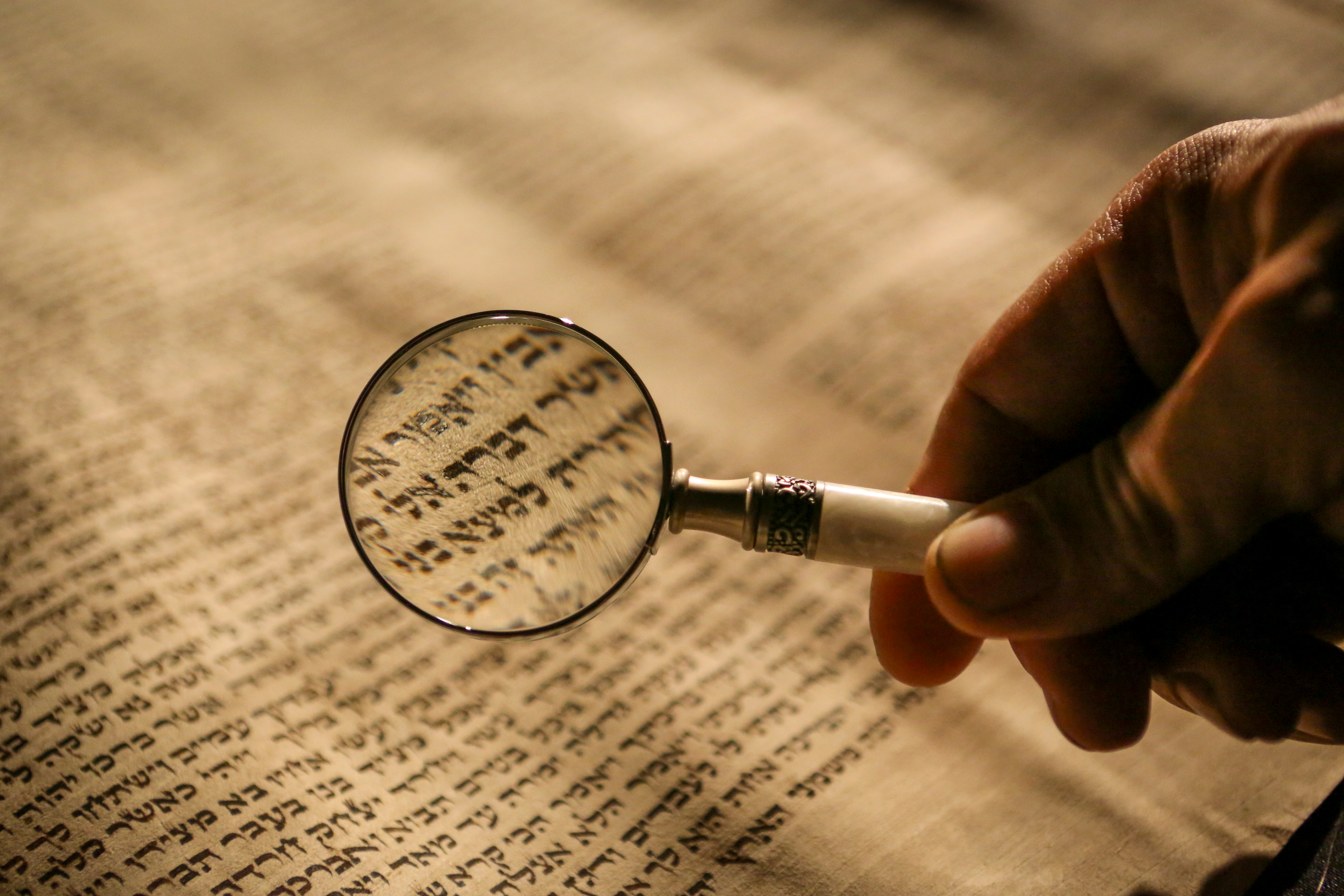
Photo by Mick Haupt on Unsplash

Filed Under: Uncategorized

Moses, Part 1: Youth

October 8, 2026 by Dan Olinger Leave a Comment

We can approach the organization of the Old Testament in multiple ways. I’ve noted before that the sections of the Hebrew Canon–the Law, the Prophets, and the Writings–seem to be organized around the offices of the coming Messiah–Priest, Prophet, and King.

Another way to approach it is to focus on the covenants. There are six most commonly recognized. The first, the Adamic, involves not eating from the Tree of the Knowledge of Good and Evil (Ge 2.17). Adam broke that covenant, as we know, and apparently fairly quickly. The second, the Noahic, is God’s promise that he would never again destroy the earth with a global flood (Ge 9.8-17). The rainbow is the ongoing sign of that covenant, which God of course has kept.

The next three covenants are stages in the life of Israel: the Abrahamic, the Mosaic, and the Davidic. And the final covenant is called simply the New Covenant, which is predicted in Jeremiah (Jer 31.31-34) and initiated by Jesus at the Last Supper (Lk 22.20).

We’ve just completed a look at the Abrahamic Covenant, with its threefold promise of a large biological family, a homeland, and universal blessing through his “seed” (singular). We turn now to Moses and the covenant that God made with him and the Israelites. Its focus is on elevating the status of Israel from a family to a formal nation. This incorporation happens at Sinai.

I’d like to look at his life in six stages: his youth in Egypt, his exile in Midian, the Exodus event, the Sinai event, the 40 years of wilderness wandering, and his death.

You may recall our earlier observation that when a narrative slows down–goes into more detail–the narrator sees that portion as particularly important. Moses’ youth and exile move along quickly; the Exodus moves more slowly; and the Sinai event and the wanderings are recounted in great detail. Moses’ death, by contrast, is just a paragraph.

So we’ll spend most of our time on Sinai and the wanderings–but even that will need to move right along in this blog format.

Let’s begin with Moses’ youth.

We all know the story. Israel has prospered in Egypt (Ex 1.7), originally under Joseph’s protection. But times change, and eventually a Pharaoh arrives “who [knows] not Joseph” (Ex 1.8). He sees this large foreign populace as a potential threat and seeks to prevent any possibility of an armed uprising (Ex 1.9-10) by just killing all the boys. That seems unreasonably harsh to us, but in those days such a policy was not all that rare.

God providentially delivers one particular boy baby through the deception of the midwives (Ex 1.15-21), the dedication of his mother (Ex 2.2-3), and the craftiness of his older sister (Ex 2.4-9). He is not only allowed to live, but he lives under the sponsorship of Pharaoh’s daughter (Ex 2.10), with access to all the advantages of a member of the royal family.

Aside from divine providence, this outcome is simply not believable. How likely is it that a dictator who would order the death of all Israelite male babies would accept at face value the midwives’ story–and wouldn’t react to it by sending soldiers to kill the babies that they had allowed to live? We see something similar happen centuries later (Mt 2.16).

How likely is it that Moses’ mother (we learn later [Ex 6.20; Num 26.59] that her name is Jochebed, meaning “YHWH is glorious”) would be “not afraid of the king’s commandment” (He 11.23) and then would set her precious baby boy adrift in the Nile? and at the precise spot where Pharaoh’s daughter would come to bathe? How likely is it that the princess, recognizing the boy’s race (Ex 2.6) and knowing that her father had ordered all like him to be killed, would raise him as her own son–and that no one in the royal family would notice and react harshly?

Not likely at all, especially in combination. (Math works that way.)

God unfailingly accomplishes his will and attains his purposes. “Thy will be done” is not a prayer that requires much faith.

Centuries later, in the sermon that got him killed, Stephen preached that “Moses was learned in all the wisdom of the Egyptians, and was mighty in words and in deeds” (Ac 7.22). God has providentially prepared this man, from infancy, to fulfill the astonishing role that lies ahead.

Photo by Mick Haupt on Unsplash

Filed Under: Bible, Theology Tagged With: biography, Exodus, Moses, Old Testament

Abraham, Part 13: Continuation

October 5, 2026 by Dan Olinger Leave a Comment

Part 1: Introduction | Part 2: Journey to Canaan | Part 3: Settlement | Part 4: Establishment | Part 5: Covenant | Part 6: Ishmael. Not. | Part 7: Implemented | Part 8: Isaac Promised | Part 9: Certified at Sodom | Part 10: Certified in Gerar | Part 11: Fulfillment | Part 12: Preservation

We are now winding down the life of Abraham. Moses, our narrator, relates several events that speak to the continuation of the Abrahamic Covenant after its namesake’s death.

Sarah dies (Ge 23.2), and Abraham purchases a burial cave from a local Hittite (“son of Heth”) (Ge 23.3-18) and buries her. Here the account is again drawn out–the entire conversation is reported–indicating that this is a significant event. The significance is twofold: first, it indicates that Abraham intends to reside permanently in Canaan, in recognition of God’s promise to him; it is one more evidence of his faith. We will learn later in Genesis that several generations of Abraham’s descendants are to be buried in the same cave, indicating that the cave itself is of sufficient size to accommodate long-term local residency. Second, it indicates the Canaanites’ respect for Abraham and their recognition of his right to establish that residency. This is evidence of God’s work on his behalf, and it helps establish the appropriateness of his descendants’ broader claim to the land.

The second event is also highly significant. In this longest chapter in Genesis, Abraham arranges for a wife for the covenant son, Isaac, who is now 40 years old (Ge 25.20), which would make Abraham 140 (Ge 21.5). Despite the indication of Abraham’s friendly relations with the Canaanites, Abraham is careful to demand that the wife come from his own people, not the idol-worshipers (Ge 24.2-4). His servant (perhaps Eliezer of Damascus? Ge 15.2), anticipating a possible complication, asks whether it would be possible to take Isaac along (Ge 24.5); Abraham strictly forbids it (Ge 24.6)–again an evidence of his faith and conviction regarding the Lord’s covenant (Ge 24.7). The servant promises and heads out (Ge 24.8-9) on a nearly 500-mile journey, which would have taken a couple of months.

Moses relates the details of what follows, clearly meaning to demonstrate the Lord’s providential working. The Faithlife Study Bible notes that this is “the first person in the Bible to pray for divine guidance. God answers his request before he finishes speaking.” God answers his prayer (Ge 24.12-13), a prayer designed to identify a woman of character. (A camel can drink up to 25 gallons, and the servant had 10 of them [Ge 24.10]). The woman is Abraham’s relative–in fact, the very woman that God has chosen (Ge 24.15-21). The servant introduces himself (Ge 24.22-23), meets the family (Ge 24.24-30), and finds a warm reception (Ge 24.31-33). He then presents his mission (Ge 24.34-49), recounting in great detail all that has happened previously. The family is perfectly receptive (Ge 24.50-54), even acceding to the servant’s request that they return immediately (Ge 24.55-57)–with Rebekah’s agreement and their blessing (Ge 24.58-60).

The account ends with the wedding (Ge 24.67).

Then follows an account of Abraham’s other descendants (Ge 25.1-4), with emphasis on Isaac’s unique standing (Ge 25.5-6).

And Abraham dies (Ge 25.7), having seen the beginning of the fulfillment of God’s promises: he has a growing list of descendants (Ge 15.5; 22.17), and he has locally recognized legal ownership of property in the land (Ge 15.7). He almost certainly has little to no comprehension of the way in which, by his seed (singular), all nations of the earth will be blessed (Ge 12.3). But he is full, and he is faithful, and he is content.

What’s next? I’ve been planning to write a series on the recipients of the three major covenants, who lived every 500 years from 2000 BC to 1000 BC: Abraham, Moses, and David. We’ll turn to Moses next time.

Photo by Mick Haupt on Unsplash

Filed Under: Bible, Theology Tagged With: Abraham, biography, Genesis, Old Testament

Abraham, Part 12: Preservation

October 1, 2026 by Dan Olinger Leave a Comment

Part 1: Introduction | Part 2: Journey to Canaan | Part 3: Settlement | Part 4: Establishment | Part 5: Covenant | Part 6: Ishmael. Not. | Part 7: Implemented | Part 8: Isaac Promised | Part 9: Certified at Sodom | Part 10: Certified in Gerar | Part 11: Fulfillment

And now for the test of a lifetime.

Sceptics think they find a contradiction here, in that “God tempted Abraham” (Ge 22.1), since James tells us that God doesn’t tempt anyone (Jam 1.13). But such a charge amounts to an admission of ignorance, since human language is more complex than that: words have multiple meanings, and context makes clear that James speaks of temptation to sin, while Moses here speaks of testing or trial.

But that still raises a question: the angel of God will soon say, “Now I know that you fear God” (Ge 22.12). Didn’t he know that before? Then why the test?

That’s a legitimate question. I think it’s pretty clear that God is anthropomorphizing, speaking in human terms for the sake of our understanding. Of course God knew what Abraham would do. But he wanted Abraham–and us–to know as well. Hence the test.

And this is how it proceeds. With no explanation or even preparation, God tells Abraham to take Isaac, the covenant son, and offer him as a burnt offering on a distant mountain (Ge 22.2). If Abraham protested–I find it hard to believe he didn’t–there is no record of further conversation. He gets up early the next morning, chops some wood, and off they go (Ge 22.3).

It’s a three-day journey to the mountain in the land of Moriah (Ge 22.4). He leaves his servants at the foot of the mountain with the animal (Ge 22.5)–remarking that both of them will return–and has Isaac carry up the slope the wood for his own sacrificial fire (Ge 22.6).

It’s clear that Abraham hasn’t discussed all this with his son. Isaac has questions. A burnt offering involves an animal; why haven’t they brought one (Ge 22.7)?

Abraham says that God will provide the sacrificial animal (Ge 22.8). Here most of the modern versions say that God will provide it “for himself,” which properly reflects the Hebrew. The KJV says, “God will provide himself a lamb.” The omission of the Hebrew preposition there has allowed some interpreters to read the sentence as “God will provide himself [as] a lamb,” thereby anticipating Christ’s death on the cross. However, the Hebrew does not allow this reading.

The author of Hebrews tells us what Abraham was thinking–that he was going to kill Isaac, and that God was going to bring him back from the dead (He 11.19). He was determined to obey, and he was equally determined that God would not break his covenant promises.

Thus when Abraham tells Isaac that God would provide a lamb, he is not anticipating what actually happened; he is still shielding his son from the reality of what lay ahead.

We all know what happened. It soon became clear to Isaac that he was the lamb, and he apparently did not resist the outcome (Ge 22.9). Isaac was apparently plenty old enough to resist his aging father; Josephus places him at age 25, and another Jewish tradition places him at 37.

As Abraham was within a second of delivering the fatal thrust (Ge 22.10), the angel of God stopped him, explained the reason for the apparently insane request, and offered an alternative animal (Ge 22.11-13)–what Abraham had predicted, but not what he had expected.

Abraham names the place YHWH-yireh, “YHWH sees” (Ge 22.14). Without the patriarch’s realizing it, YHWH compares Abraham to Himself, one who offers his only Son (Ge 22.16). In his last recorded words to Abraham, God repeats the covenant promises, intensifying them by verbal repetition: “I will certainly bless you, and I will certainly multiply your offspring” (Ge 22.16-17). And all nations of the earth will indeed be blessed, when God offers his own Son as the sacrifice for sin (Ge 22.18)–incidentally, on the same mountain.

And then they all go home (Ge 22.19).

What’s next? Moses includes a little genealogical information to prepare for God’s next faithful step: providing a wife for the living Isaac (Ge 22.23).

Part 13: Continuation

Photo by Mick Haupt on Unsplash

Filed Under: Bible, Theology Tagged With: Abraham, biography, Genesis, Old Testament