Dan Olinger

"If the Bible is true, then none of our fears are legitimate, none of our frustrations are permanent, and none of our opposition is significant."

Dan Olinger


Retired Bible Professor,

Bob Jones University

home / about / archive 

Subscribe via Email

Moses, Part 6: Preparation

October 26, 2026 by Dan Olinger Leave a Comment

Part 1: Youth | Part 2: Exile | Part 3: Call | Part 4: Confrontation | Part 5: Deliverance

Now we move from phase 3 of Moses’ life–Exodus–to phase 4: Sinai. This is the highlight; this is the place of the Mosaic Covenant.

Moses and his people have escaped from Egypt and from the clutches of the Egyptian army at the Red Sea. Now it’s time to travel to Mt. Sinai. It’s a walk of perhaps 125 to 150 miles as the crow flies, but it’s entirely desert, and there are children, and animals. They’ll need to take their time.

And they’ll need supplies.

The first thing God teaches them, right out of the gate, is that he’s going to take care of them; he’ll provide all they need. The lesson comes in five parts.

First, after three days (Ex 15.22) they arrive at an oasis, of sorts, but the water is not drinkable (Ex 15.23). This is their first chance to turn to God for help since the Red Sea, where his demonstration of commitment to them was literally miraculous.

They complain.

Not a good start.

Moses brings the problem to God, who provides a solution (Ex 15.25). Was this a miracle, or was there some sort of catalyst or reactant in this species of tree? Doesn’t say. But it’s clear that God intervened on their behalf. And he promises to do whatever’s necessary in the days ahead (Ex 15.26).

Okay then. Lesson learned?

We’ll see.

Second, they arrive at a better oasis, with plenty of good water (Ex 15.27), as preparation for the longer desert journey. They then enter the wilderness and immediately begin complaining again (the desert is a stark contrast with the oasis at Elim), and this time they escalate: they condemn Moses and Aaron for getting them out from slavery in Egypt, because at least they had food to eat there (Ex 16.2-3).

The Lord responds calmly, generously, and kindly. He introduces them to manna (they’ll call it “what is it?” [Ex 16.15]), which will supply their nutritional needs for 40 years–though they don’t know about the 40 years yet. He’ll supply it every day (Ex 16.4)–and twice as much on Fridays, so they can rest on the Sabbath (Ex 16.5).

As an extra treat, this evening he’s going to supply them with meat from quails (Ex 16.12-13).

We don’t know how many people the Lord was feeding. We know that there were about 600,000 men “on foot” (Ex 12.37), so a population of 2 million or so seems reasonable.*

God tells the people that they must not store up the manna; he will provide it every morning (6 days a week), and they need to trust him for it.

Some don’t, and the extra manna rots (Ex 16.20).

He’s teaching them to trust.

Moses orders a container of the manna to be set aside permanently (Ex 16.32-34). It does not rot; eventually it will be placed in the Ark of the Covenant (He 9.4).

They have food. But they’ll need water. They complain (Ex 17.2), as we’ve come to expect, not only speaking favorably of Egypt, but accusing Moses of intending to kill them all (Ex 17.3).

Yikes.

For a third time God steps up and provides water, miraculously, from a rock.

What’s the next need? Israel faces attack from the Amalekites (Ex 17.8), and God gives them victory in a clearly miraculous way (Ex 17.15). This is number four.

There’s one more. Moses needs some management training. Apparently he didn’t get any of that in the Egyptian royal house; he’s no delegator, and he’s trying to do everything himself (Ex 18.13). In grace, God has just brought Moses’ father-in-law, Jethro, onto the scene, apparently for a family visit (Ex 18.2-7). Moses tells of all that God has done, and Jethro, as a priest, offers the appropriate sacrifice.

But he detects Moses’ lack of management expertise, and he points out a solution (Ex 18.15-23), and Moses recognizes the wisdom of his counsel (Ex 18.24-26).

This is a key moment in Israel’s history; from this brief visit the organization of the nation is set up, and the system is in place for the effective and efficient management of these 2 million people with no permanent residence as yet. God, knowing of the impending forthy-year wilderness trek, has graciously provided, for the fifth time, what Israel will need in order for God’s land promise to Abraham to be fulfilled.

* Some scholars think that number is just impossible, so they note that the word for “thousand” can appear to mean “family” or “clan,” allowing for a much smaller population. I’m inclined to take the number seriously.

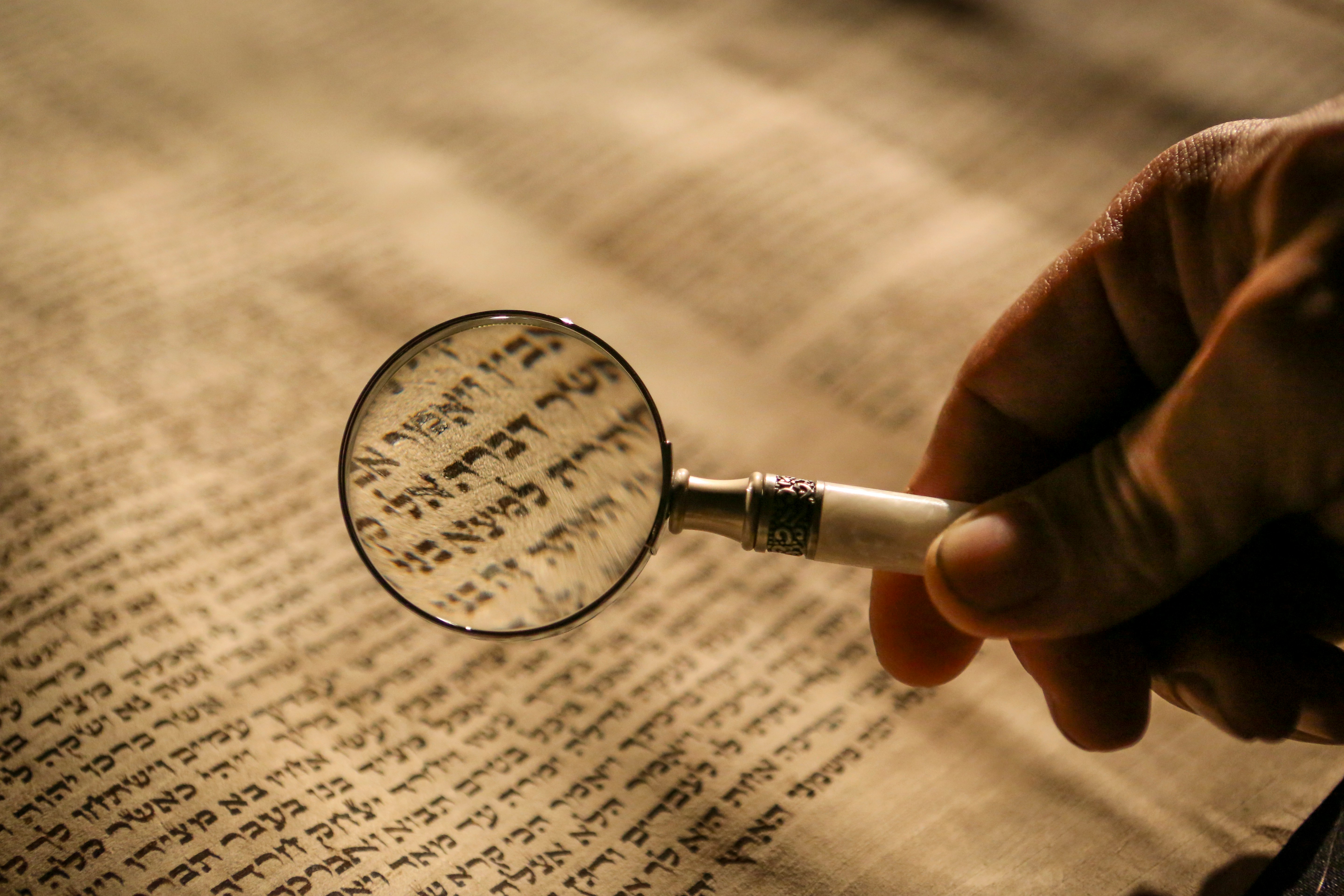
Photo by Mick Haupt on Unsplash

Filed Under: Bible, Theology Tagged With: biography, Exodus, Moses, Old Testament

Moses, Part 5: Deliverance

October 22, 2026 by Dan Olinger Leave a Comment

Part 1: Youth | Part 2: Exile | Part 3: Call | Part 4: Confrontation

God’s confrontation with, and defeat of the gods of, Pharaoh is now complete. The Sun-god Ra has been darkened, and the darkness of death hangs over every Egyptian house, including Pharaoh’s.

It’s time for God’s people, Israel, to be delivered from slavery and into their own land, with their own vines and their own fig trees.

God’s promises are so sure that he begins, not by delivering them, but by giving them a holiday by which to commemorate that deliverance–before it happens. And they will continue to commemorate it to this very day (Ex 12.42).

It’s springtime. God designates this month, Nisan, as the first month of their religious year (Ex 12.2). It will embrace a day, in the middle of the month, designed to remind Israel forever of what’s about to happen. Each family will select a perfect lamb–poor people can select a less expensive animal–and inspect it for a time to guarantee its perfection. Then they will sacrifice it and scatter its blood on their doorframes (Ex 12.7) as a symbol of vicarious death and redemption. And they will gather as family and eat the lamb together, with “bitter herbs” (Ex 12.8)–today that’s horseradish–as a symbol of suffering accompanied by provision.

They eat with their traveling clothes on (Ex 12.11) to symbolize the fact that they’re leaving; perhaps that fact is also why they burn whatever they can’t eat (Ex 12.10).

This night the angel of the Lord–I believe the preincarnate Christ–will pass through Egypt, in the middle of the night in the middle of this month, to kill the firstborn of every house–except those with the lamb’s blood on their doorframes. He will pass over those (Ex 12.13).

In the years to come, this special day will follow a week of anticipation, during which they will eat only unleavened bread, another symbol of haste (Ex 12.15): no time to let the dough rise. There will be two days of no work, to commemorate the ending of the hard labor of slavery (Ex 12.16).

And so it is done (Ex 12.28-30).

Pharaoh, ever vacillating, orders Moses and his people out of the country (Ex 12.31). They gather what possessions they can carry, along with riches surprisingly bestowed on them by their Egyptian neighbors (Ex 12.35-36), and they head east, toward the Red Sea. And the presence of God, in the form of a hovering glorious light, goes with them (Ex 13.21-22).

A word about that light. I’m of the opinion that it was the same manifestation all the time; in the daytime the bright light looked like a cloud, while in the darkness of night it looked like fire. The cloud would obscure vision; people couldn’t see through it to the other side. So it’s described as “darkness” (Ex 14.20), meaning zero visibility. In the Jewish mind, heavy fog is darkness because it obscures vision. We would call fog bright, not dark.

Pharaoh, the ever-vacillating one, changes his mind yet again (Ex 14.5); deliverance is not yet complete. The Egyptian army pursues the Israelite pilgrims (Ex 14.7-9). The Israelites, seeing the pursuing army, turn on Moses, questioning his judgment (Ex 14.10-12). Pharaoh isn’t the only one who vacillates–and this won’t be the last time.

God tells Moses what to do, and Moses, in faith, believes the impossible (Ex 14.15-18). The sea parts, and Moses leads Israel into the valley between the walls of water. Israel, too, has faith, though inconsistently. Once Israel’s through, and Pharaoh’s army is pursuing them, Moses recalls the waters, and the army is destroyed (Ex 14.27-28).

Finally, deliverance.

There’s a story on social media about the alleged discovery of chariot wheels at the bottom of the Red Sea. It bears every evidence of being bogus; the people and institutions named in the account do not match what it says about them. God’s people don’t need such evidence, though God does occasionally give it.

This is worth celebrating. Moses, the poet, leads Israel in a song of celebration (Ex 15.1-19), as does his older sister, Miriam (Ex 15.20-21).

Thus climaxes the deliverance of Israel from Egypt, closing the third phase of Moses’ life. All of this, though, is just prologue to what’s just around the corner. God has demonstrated his irresistible power and faithfulness to his people in a way that is still celebrated by Israelites around the world today. Moses’ flock of Israelites will need that assurance as they proceed.

Photo by Mick Haupt on Unsplash

Filed Under: Bible, Theology Tagged With: biography, Exodus, Moses, Old Testament

Moses, Part 4: Confrontation

October 19, 2026 by Dan Olinger Leave a Comment

Part 1: Youth | Part 2: Exile | Part 3: Call

God has overcome all of Moses’ many excuses. It’s time now for the confrontation, the first stage of Moses’ public ministry. God describes his coming confrontation with Pharaoh, the most powerful ruler in the world, and Pharaoh’s consequent resistance (Ex 4.21-23).

We all know the story of the plagues. Since this is a theological biography, I’m not going to work through the details; I’d like to focus on two items of particular theological significance.

First, the plagues constitute a visible attack on, and defeat of, the many gods of Egypt. The first, turning the Nile into a source of death rather than life, is probably the most obvious. Several others are attacks on the fertility gods, destroying crops in various ways. The next to last, darkness, directly confronts Ra, the sun god, for whom the several Ramses (“drawn out from Ra”) are named. And the last plague, of course, is a direct attack on Pharaoh himself, and the next Pharaoh, who is cut off even before he can accede to the throne.

This God is far superior to all the gods of Egypt. Pharaoh should recognize that he is powerless before a God that he does not know.

The second key theological idea is how Pharaoh responds to all this. The logical response would be humble repentance and recognition of the true God. But autocrats typically can’t find humility and confession in their hearts, no matter how deep they search. Their reflex is to double down, and eventually, when they recognize their defeat, to bluster.

And that raises the issue of the hardening of Pharaoh’s heart.

Soon after God’s conversation with Moses at the burning bush, he predicts how this will turn out (Ex 4.21). Pharaoh will not be cooperative. And, God says, “I will harden his heart.” He says this again later (Ex 7.3), and then he does it (Ex 7.13) and announces that it is done (Ex 7.14).

Is God being unfair to poor old Pharaoh, hardening his heart from the outside, without giving him a chance to show his unmanipulated thoughts?

Not at all.

God, unlike the River or the Sun, knows all things, and he knows whom he’s dealing with. Pharaoh is powerful and proud, and he has defeated the gods of every people he’s attacked. He was never going to listen to the God of these slaves, even from the beginning; he has already demonstrated that (Ex 5.1-2). And sure enough, throughout the series of plagues, he hardens his own heart repeatedly (Ex 8.15, 32; 9.34). This is who he is and who he chooses to be.

So God gives him what he wants. Like a martial artist or a chess (infinitely) grand master, he uses this opponent’s moves against him, continuing to harden his heart for him throughout the process (Ex 9.12; 10.1, 20, 27; 11.10) and even after the plagues are over (Ex 14.4, 8, 17).

Of course the omnipotent God could be a bully, if that were consistent with his nature.

But it’s not. And he doesn’t need to be a bully; he accomplishes his perfect will perfectly justly and even graciously, freely giving Pharaoh the breath he uses to curse this unfamiliar God and allowing him to act in feckless opposition to him.

God keeps his promises; he will deliver his people from slavery and restore them to the Land of Promise.

He is just, even with his enemies, and he is good.

Next time: deliverance.

Photo by Mick Haupt on Unsplash

Filed Under: Bible, Theology Tagged With: biography, Exodus, Moses, Old Testament

Moses, Part 3: Call

October 15, 2026 by Dan Olinger Leave a Comment

Part 1: Youth | Part 2: Exile

Moses is now 80 years old, or approaching that age (Ex 7.7).

Wow. What has happened during all that time?

Doesn’t matter. Moses, narrating his own story, has chosen to cover the first two-thirds of his life in just one chapter, and not all of the chapter at that. But now our narrative slows dramatically.

This phase starts with God’s call of Moses into his service. Chapter 2 ends with a paragraph describing God in very human terms: a new Pharaoh initiates bondage for the Israelites (Ex 2.23); God hears their cry and remembers his covenant with Abraham (Ex 2.24); and he notices and is moved in response (Ex 2.25).

Chapter 3 begins with God acting on what he has seen; he seeks out Moses, who is now well settled in to the family business (Ex 3.1). We learn that Reuel, his father-in-law, has another name, Jethro–and that he is a priest. Given his later interactions with Moses, I’m inclined to think he a priest of the true God, as Melchizedek was in Abraham’s time. With Jethro, as with Melchizedek, we don’t know how that came to be. By some sort of revelation, certainly.

Moses is tending the flock on “the back side of the desert” (Ex 3.1 KJV). Modern readers think this means that he was way out in the boonies. He certainly was, but that’s not what the phrase means. Biblical directions face east, where the sun rises; north is on the left, south is on the right, east is in front, and west is behind. So the “back side” would be the west side–which is right where Midian is. So there’s no new information here.

Now, at Horeb, the angel of God appears to him. This is Mount Sinai, where the Mosaic Covenant will later be executed (Ex 3.12). The traditional site of Sinai is on the Sinai Peninsula. This means that Moses traveled a ways with the flock. There are some who believe that Sinai was in Midian; there are evidences to make that attractive, but it does seem odd that Mount Sinai wouldn’t be on the peninsula for which it’s named. I remain steadfastly uncommitted.

The angel appears in an unusual way: as fire in a bush, fire that is not consuming its fuel (Ex 3.2). As Moses approaches, God himself speaks from the bush (Ex 3.4). Is this angel (“messenger”) of God also God? That’s a big question, but I believe “the angel of YHWH” is a preincarnate embodiment of the Son.

And so he speaks.

His first statement identifies him and calls Moses to worship (Ex 3.5). Then, as further self-identification, he states that he is the God of Abraham’s Covenant (Ex 3.6). God tells Moses his name: “I am that I am” (Ex 3.14). The Hebrew verb “I am” is “ehyeh.” The verb “he is” is “yehyeh.” Changing the third letter in that latter verb yields YHWH, the personal name of God, which has been used repeatedly in Moses’ account since Genesis 2.4. In fact, Moses’ mother’s name, J[eh]ochebed, is based on that name. This is the covenant name, the personal name. It was as YHWH that God promised Abraham the Land. And now it is YHWH who will fulfill that promise.

Moses can’t possibly have missed that connection, either at the time or (perhaps) decades later when he wrote the Torah.

After identification comes the call to mission. It’s time to make the Promised Land Israel’s home (Ex 3.8). Now, in response to their cries and his investigation (Ex 3.9), he is appointing Moses to be his agent of deliverance (Ex 3.10).

Moses’ response may seem puzzling. He grew up in Pharaoh’s household; he knows the culture intimately (Ac 7.22). But then, that was 40 years ago, and we all feel distant from situations we left that long ago. At best, he’s rusty, and there may well now be social and cultural changes that he’s unfamiliar with. Further, if this is the same Pharaoh, they did not part on good terms, and if it’s a later one, they might not even be acquainted. And over the past 40 years, he’s been a shepherd, not a court functionary.

So he resists. Repeatedly.

“I’m nobody.” “I’ll be with you” (Ex 3.11-12).

“The Israelites don’t know me.” “Tell them you’re my agent, and they will hear you. And I guarantee your success” (Ex 3.13-22).

“They won’t either listen to me!” “I’ll empower you in ways that they will find convincing” (Ex 4.1-9).

“I’m a lousy public speaker.” “I can take care of that” (Ex 4.10-12).

“Send somebody else.” “I’ll let Aaron be your spokesman. Now stop this foolishness, and let’s get busy” (Ex 4.13-17).

And off he goes (Ex 4.18-23).

Next time: confrontation.

Photo by Mick Haupt on Unsplash

Filed Under: Bible, Theology Tagged With: biography, Exodus, Moses, Old Testament

Moses, Part 2: Exile

October 12, 2026 by Dan Olinger Leave a Comment

Part 1: Youth

The boy Moses, prince of Egypt, has great advantages growing up in the royal family. But as he is commencing his adulthood, he displays a virtue marred by a character flaw.

He knows, of course, that he is a Hebrew; his adoptive mother knew that from the beginning (Ex 2.6), and it seems unlikely that she would never have told him. Further, this assumption helps explain his actions in this episode.

He goes out to see “his brethren” (Ex 2.11), and he sees one of them being abused by an Egyptian taskmaster. His response is immediate: he kills the Egyptian (Ex 2.12).

That’s interesting, first because the taskmaster is likely physically fit and carrying some sort of weapon. Moses was thus probably highly fit and skilled in physical combat.

But he’s also not good at controlling his temper.

That may have been a consequence of his privileged upbringing, or it may have been a natural inclination. But given the consequences of his action–effectively expulsion from the royal family–it indicates a serious lack of self-control.

Now, Moses is writing this account; it is genuinely an autobiography, a retrospective. As he writes, he knows how his life is going to play out, particularly in the ways God is going to work with him. By the fourth of the five books that make up this story, Moses is going to be identified as “very meek, above all the men which were upon the face of the earth” (Num 12.3). Now, there’s an active discussion about whether Moses himself wrote this sentence, or it was added by a later editor, but that’s beside the point. Meekness is self-control; and this man, who started out by murdering an Egyptian in anger, is eventually going to be very different. God will do that, and he will do it through hard, hard times (Ro 5.3-5).

We begin by anticipating the end.

What’s next? Well, his rage brings consequences. Despite his care to ensure that there were no witnesses (Ex 2.12), there were, and he finds that out immediately. The very next day an Israelite makes it clear that he knows about the murder (Ex 2.14). Either he saw it happen, or word has gotten around. It’s easy to imagine that the Israelites, deep in hard bondage, would spread the story of an apparent defender, particularly a highly placed one.

Pharaoh seeks to kill Moses (Ex 2.15). That seems puzzling, given Moses’ family standing; wouldn’t he be protected from the consequences of killing a mere functionary? We could speculate, but the upshot is that he has to run for his life (Ex 2.15).

He runs to Midian. This area is in what is now extreme northwest Saudi Arabia, just beyond the Sinai Peninsula and the Gulf of Aqaba. It’s generally desert, badlands, a reasonably nearby place to disappear into.

There are people there, but the environment means that they’ll probably be bedouins, caring for sheep and goats, which can find food in the most desolate places, and moving them as necessary to keep body and soul together.

But Moses comes across a family that has settled down by a well (Ex 2.15-16): once you find water in a place like that, you tend to stick around. This family consists of seven sisters who are doing the hard work of watering the flock from the well. Moses, the man who had just recently killed an Egyptian for abusing workers, now sees competing shepherds harassing these women, making their task even more diffcult.

By nature he’s a deliverer. He steps up (Ex 2.17).

The girls head home early because of Moses’ help, and Dad asks how they finished so quickly (Ex 2.18). They tell him the story (Ex 2.19), and he asks why they let their deliverer get away (Ex 2.20).

In our culture we find humor in this; a father of seven daughters rebukes them for letting a chivalrous man escape their clutches.

I think that’s eisegesis, reading our culture into a very different one.

The Middle East was then, and is even today, a place where hospitality is expected and aggressively practiced. If this man is a stranger–not from around here–then he needs food and shelter. Dad thinks, “We shouldn’t have let him go without offering him what he needs.”

So Dad, whose name is Reuel, not only offers him the needs of the day but invites him for a longer stay (Ex 2.21). Sure, Moses eventually marries his daughter Zipporah, but that seems a natural consequence rather than a manipulated outcome.

They have a son and name him Gershom (“a foreigner there”).

This former prince, now a shepherd in the family business of his in-laws, is about to embark on the career of a lifetime.

Photo by Mick Haupt on Unsplash

Filed Under: Bible, Theology Tagged With: biography, Exodus, Moses, Old Testament

Moses, Part 1: Youth

October 8, 2026 by Dan Olinger Leave a Comment

We can approach the organization of the Old Testament in multiple ways. I’ve noted before that the sections of the Hebrew Canon–the Law, the Prophets, and the Writings–seem to be organized around the offices of the coming Messiah–Priest, Prophet, and King.

Another way to approach it is to focus on the covenants. There are six most commonly recognized. The first, the Adamic, involves not eating from the Tree of the Knowledge of Good and Evil (Ge 2.17). Adam broke that covenant, as we know, and apparently fairly quickly. The second, the Noahic, is God’s promise that he would never again destroy the earth with a global flood (Ge 9.8-17). The rainbow is the ongoing sign of that covenant, which God of course has kept.

The next three covenants are stages in the life of Israel: the Abrahamic, the Mosaic, and the Davidic. And the final covenant is called simply the New Covenant, which is predicted in Jeremiah (Jer 31.31-34) and initiated by Jesus at the Last Supper (Lk 22.20).

We’ve just completed a look at the Abrahamic Covenant, with its threefold promise of a large biological family, a homeland, and universal blessing through his “seed” (singular). We turn now to Moses and the covenant that God made with him and the Israelites. Its focus is on elevating the status of Israel from a family to a formal nation. This incorporation happens at Sinai.

I’d like to look at his life in six stages: his youth in Egypt, his exile in Midian, the Exodus event, the Sinai event, the 40 years of wilderness wandering, and his death.

You may recall our earlier observation that when a narrative slows down–goes into more detail–the narrator sees that portion as particularly important. Moses’ youth and exile move along quickly; the Exodus moves more slowly; and the Sinai event and the wanderings are recounted in great detail. Moses’ death, by contrast, is just a paragraph.

So we’ll spend most of our time on Sinai and the wanderings–but even that will need to move right along in this blog format.

Let’s begin with Moses’ youth.

We all know the story. Israel has prospered in Egypt (Ex 1.7), originally under Joseph’s protection. But times change, and eventually a Pharaoh arrives “who [knows] not Joseph” (Ex 1.8). He sees this large foreign populace as a potential threat and seeks to prevent any possibility of an armed uprising (Ex 1.9-10) by just killing all the boys. That seems unreasonably harsh to us, but in those days such a policy was not all that rare.

God providentially delivers one particular boy baby through the deception of the midwives (Ex 1.15-21), the dedication of his mother (Ex 2.2-3), and the craftiness of his older sister (Ex 2.4-9). He is not only allowed to live, but he lives under the sponsorship of Pharaoh’s daughter (Ex 2.10), with access to all the advantages of a member of the royal family.

Aside from divine providence, this outcome is simply not believable. How likely is it that a dictator who would order the death of all Israelite male babies would accept at face value the midwives’ story–and wouldn’t react to it by sending soldiers to kill the babies that they had allowed to live? We see something similar happen centuries later (Mt 2.16).

How likely is it that Moses’ mother (we learn later [Ex 6.20; Num 26.59] that her name is Jochebed, meaning “YHWH is glorious”) would be “not afraid of the king’s commandment” (He 11.23) and then would set her precious baby boy adrift in the Nile? and at the precise spot where Pharaoh’s daughter would come to bathe? How likely is it that the princess, recognizing the boy’s race (Ex 2.6) and knowing that her father had ordered all like him to be killed, would raise him as her own son–and that no one in the royal family would notice and react harshly?

Not likely at all, especially in combination. (Math works that way.)

God unfailingly accomplishes his will and attains his purposes. “Thy will be done” is not a prayer that requires much faith.

Centuries later, in the sermon that got him killed, Stephen preached that “Moses was learned in all the wisdom of the Egyptians, and was mighty in words and in deeds” (Ac 7.22). God has providentially prepared this man, from infancy, to fulfill the astonishing role that lies ahead.

Photo by Mick Haupt on Unsplash

Filed Under: Bible, Theology Tagged With: biography, Exodus, Moses, Old Testament