Dan Olinger

"If the Bible is true, then none of our fears are legitimate, none of our frustrations are permanent, and none of our opposition is significant."

Dan Olinger


Retired Bible Professor,

Bob Jones University

home / about / archive 

Subscribe via Email

Archives for November 2026

David, Part 3: Serving Saul

November 23, 2026 by Dan Olinger Leave a Comment

Part 1: Introduction | Part 2: Anointing

With David anointed, God begins to prepare him for kingship. He uses two factors to introduce him to King Saul’s court: his musical ability (that’s this post) and his military prowess (that’s the next one).

God creates a need in the court, one that will require David’s musical ability. “The Spirit of the Lord departed from Saul” (1S 16.14)–in sharp contrast to the previous verse (1S 16.13)–and “an evil spirit from the Lord troubled” Saul. This sounds like a demon doing God’s will. Some people are troubled by that. But it is possible; God uses even evil persons to accomplish his will, despite their completely evil intentions (Job 1.12; 1Co 5.5); he’s that powerful. But this need not be a demon; the Hebrew could be rendered “a bad mood” (cf. Num 5.14), perhaps some sort of mental illness, which could eventuate in the instability Saul will soon begin to display. Saul was already aware of his rejection by God (1S 15.23), something that had to affect his attitude (cf. 1S 18.12).

Someone in the court (“one of the servants,” 1S 16.18), probably a lower-ranking personage, suggests David. We don’t know how he came to know about David at this early point, but he presents several admirable attributes:

  • “Skillful in playing.” This directly meets the original job qualification (1S 16.16). The New American Commentary calls this “a musical quality.”
  • “A mighty man of valor” (“a military quality” NAC). This was the standard term of the day for a military hero (cf. Jdg 11.1; 1K 11.28). Since this is apparently before David’s victory over Goliath, we don’t know how this servant came up with this attribute; had David’s victories over wild animals (1S 17.34-36) become public knowledge?
  • “A man of war.” Again, we don’t know how this servant knew this. Some have suggested that the Goliath episode had already occurred, but this seems to be a stretch. Here it seems that Saul doesn’t know about him–and he certainly did after he killed Goliath. In any case, the phrase doesn’t have to mean that he had formal military experience.
  • “Prudent in speech” (literally, “an understander of words”), which would make it appropriate for him to be in the court and thus privy to sensitive goings-on. “A social quality” (NAC).
  • “A man of good presence,” or a good-looking person, which is always an advantage in social contexts (“a physical quality” NAC). The expression is used of Rachel (Ge 29.17), Joseph (Ge 39.6), Abigail (1S 25.3), David’s son Adonijah (1K 1.6), and Esther (Es 2.7).
  • “The Lord is with him” (“a spiritual quality” NAC).

With this list, the servant is saying, in effect, “He’s got it all.”

Saul sends for David, who is “with the sheep” (1S 16.19). Even after being anointed, he’s back at what he was doing before, humbly serving the needs of his family. He’s not scheming to gain the throne, something that others in his position might well justify based on the action of the prophet.

David’s father of course responds to the king’s order, sending along food, probably for David’s provision (1S 16.20).

True to the servant’s description, Saul finds the teen impressive and promotes him, apparently immediately but possibly after the death of Goliath, to be one of his armor-bearers (1S 16.21; cf. 2S 18.15), a position of great trust, one that often would place David in Saul’s immediate presence–and would keep him available for help with his episodes of the “evil spirit.”

So God has providentially prepared David for his destiny by placing him in a position

  • “to become acquainted with the manners of the court, the business of government, and the general state of the kingdom” (Jamieson, Fausset, & Brown);
  • “to display those superior gifts of his intellect and heart with which God had endowed him, and thereby to gain the love and confidence of the people” (Keil & Delitzsch).
  • Further, “he was also brought into a severe school of affliction, in which his inner man was to be trained by conflicts from without and within, so that he might become a man after God’s heart, who should be well fitted to found the true monarchy in Israel” (Keil & Delitzsch).

He will endure and profit from all this with honor and grace, further demonstrating his qualification for the throne.

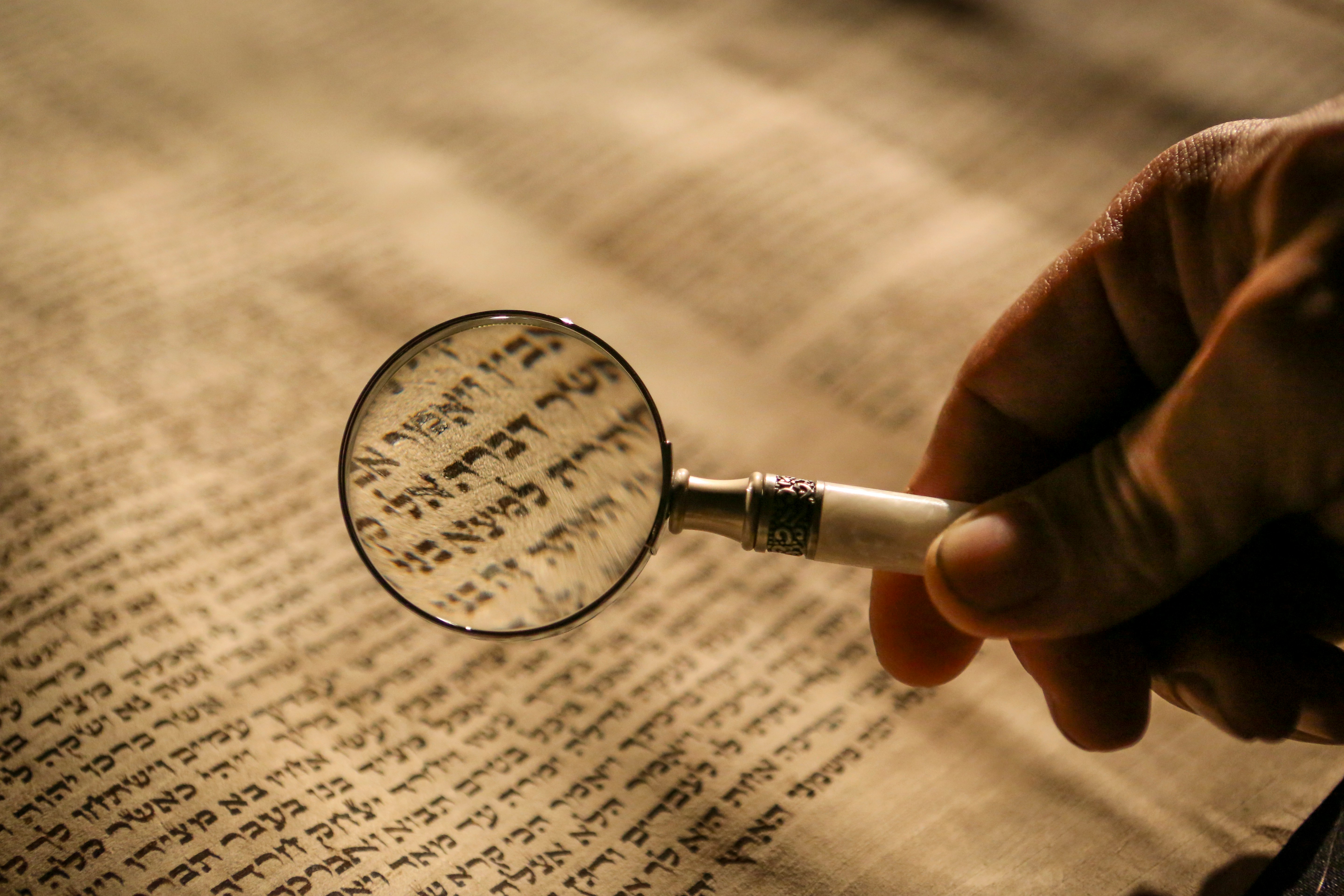
Photo by Mick Haupt on Unsplash

Filed Under: Bible, Theology Tagged With: biography, David, Old Testament, Samuel

David, Part 2: Anointing

November 19, 2026 by Dan Olinger Leave a Comment

Part 1: Introduction

We’ve noted that our first sight of David is when he is anointed king. Since the previous king is still alive and in good health, we need a reason for his anointing–and the writer tells us right off the bat: God has rejected King Saul (1S 16.1).

That should come as no surprise to us; Jacob (Israel) had prophesied on his deathbed that the nation’s king would be from the tribe of Judah (Ge 49.10). When Samuel initially told Saul of his popular appeal, Saul had noted with surprise that he was a Benjamite (1S 9.21). But the people wanted Saul because he was tall, an imposing figure.

I’m seriously tempted to riff on that for a while, but we’ll just let it go.

The people get their way, but it comes as no surprise to us that Saul is not God’s choice–and that he acts in disregard of God’s will.

Bad choices on our end do not and cannot frustrate the will of God. He has someone else, a Judahite “after his own heart” (1S 13.14), in mind, and he will be king.

But God’s choice is not named until the very end of this scene (1S 16.13).

That’s good storytelling.

Back to the beginning. Samuel engages in some misdirection as he prepares to anoint a rival to the current king (1S 16.2-5). It is not a lie that he’s come to Bethlehem to sacrifice, but it isn’t the whole truth either. Given Saul’s record of violent response against any perceived threat, care is prudent, and God himself recommends Samuel’s care (1S 16.2-3). Samuel actually does Saul a favor of sorts by preventing him from adding yet another sin to his record.

Why do the town’s elders expect trouble (1S 16.4)? There are different guesses, but that’s all they are. Samuel had just violently killed an Amalekite king (1S 15.33), an act that ought to make anyone afraid of him. The Law called for a sacrifice in a town with an unsolved murder (Dt 21.1-9). Bethlehem was a small village, and a visit from The Prophet must mean something’s up.

But none of these factors reflect Samuel’s actual purpose; the elders have nothing to fear.

As the residents come to the sacrifice, Samuel eyes Jesse’s sons (1S 16.5-10). He betrays an inclination toward externalism (1S 16.6; cf 10.24), which the Lord corrects (1S 16.7). And seven sons God rejects (1S 16.10), one after the other.

Samuel is puzzled. Are there other sons?

Oh, yeah. There’s the kid, out keeping the sheep. Jesse hadn’t even called him in for the sacrifice; somebody’s got to watch the sheep, right? (1S 16.11).

How old was he? Josephus says he was 10, which is almost certainly too young. Most commentators put him in his upper teens.

This is the guy (1S 16.12).

In recognition of God’s choice, and in obedience to his command, Samuel anoints this fresh-faced youth (1S 16.13). This anointing is apparently private, separate from the traditional post-sacrifice public meal, perhaps back at Jesse’s house. Later, as a grown man, he will be anointed again, publicly, as king of Judah (2S 2.4) and Israel (2S 5.3).

The God who overrules the choices of the people also empowers his choices to accomplish what he has in mind for them. This empowerment comes in the person of God’s Spirit (1S 16.13).

The most common verb for the Spirit’s work in the Old Testament is “to come upon.” This occurs typically with prophets or military heroes, and in all cases besides this one it appears to be temporary. Here the Spirit is said to come upon David “from that day forward.” This appears to be the only example in the Old Testament of what we Christians call “indwelling.” God gives David, the man after his own heart, a very special gift. It’s no surprise that after his great sin against Bathsheba and Uriah he prays, “Take not thy Holy Spirit from me” (Ps 51.11).

So David has humble beginnings, both in his life station as the youngest child (God will later make him his own firstborn [Ps 89.27]!) and in his own heart; he is not seeking the throne. As one commentator (TCBC) notes, he appears the very opposite of the defensive and assertive Saul.

But we know that he is in the line of promise.

Photo by Mick Haupt on Unsplash

Filed Under: Bible, Theology Tagged With: biography, David, Old Testament, Samuel

David, Part 1: Introduction

November 16, 2026 by Dan Olinger Leave a Comment

We have sketched out the theological biographies of the first two Old Testament figures who are associated with major Covenants that God made with his people Israel. Abraham and Moses represented God’s people in enacting these Covenants, which began with a particular people: the offspring of Abraham’s son Isaac. The Abrahamic Covenant identified Isaac’s descendants as a Covenant people, and the Mosaic Covenant constituted them as a nation. Though both of these Covenants implied benefits far beyond just Isaac’s people–in his father’s seed all families of the earth would be blessed (Ge 12.3)–the focus was on what came to be known as Israel.

The third Covenant, with David, maintained a similar focus, but particularly with respect to this nation’s king. Again there are implications of universal application: this king would rule forever (2S 7.16).

But we’re getting ahead of ourselves.

We first meet David as a boy, probably a teenager. His birth is not recorded, because in that society it didn’t matter much; he was descended from an Israelite named Boaz and his Moabite wife (Ruth 4.17, 22). The Moabites were particularly enemies to Israel; they were descendants of Lot’s drunken incestuous relationship with his daughter (Ge 19.37); when the Israelites were traveling to the Promised Land, their king, Balak, hired the prophet Balaam to curse them (Num 22.1ff); the Moabite women seduced the transiting Israelite men into idolatrous sexual sin at Baal-Peor (Num 25.1ff); God specifically commanded that a Moabite should not be accepted as a convert “to the tenth generation” (Dt 23.3); and during the time of the judges, Moab’s king Eglon had oppressed Israel for 18 years (Jdg 3.14).

David’s descent from a Moabite woman was not a badge of honor. But as we’ll see, it too has implications of the coming Covenant’s universal application.

Further, he was the youngest of 8 brothers (1S 16.10), the least respected position in any family; when the prophet Samuel asked to see Jesse’s sons, Dad didn’t even bother to summon David, who was out tending the sheep (1S 16.11).

This is his situation when we meet him; he’s the overlooked son of a fecund rancher.

We learn about David’s life from several sources. The Book of Samuel (in the Hebrew canon it’s just one book) is the primary source. It’s supplemented by the Book of Chronicles (again, one book), written much later, after the return from the Babylonian exile, possibly by Ezra; briefly by the Book of Kings; and by the Psalms that he wrote. Many of those Psalms include a superscript identifying the circumstances under which they were written. (There’s controversy over how seriously to take those superscripts; some have held they are inspired text, while others–the current majority–think they were added later by unknown editors. Here we won’t try to answer the question, but we will take them as typical historical records.)

It can be challenging to weave all these sources together. For what it’s worth, I’ve made an attempt, which you can download here.

Remember how the Book of Deuteronomy parallels the standard form for an Ancient Near Eastern suzerainty covenant? We have a similar situation here. The Hittites were an ancient people north of Israel, in the general area of southeastern Turkey. They had a king named Hattusili III in the 1200s BC, about 200 years before David. A document about (by?) this king survives, called “The Apology of Hattusili III,” justifying his status as king. (He had overthrown his nephew Mursili III.) Its organization is similar to the way the writer of Samuel described David’s ascent to the throne:

“Similarities suggest that one of our author’s [i.e. of the book of Samuel] primary purposes in recording the history of the era was to firmly establish the legitimacy of David and his line, and defend their continuing right to the throne. The literary parallels include: a detailed description of why the previous ruler was disqualified; an emphasis on events leading up to the ruler taking the throne; an affirmation of the new ruler’s piety; and a summary of the king’s reign showing that God confirmed His choice by blessing the nation” (Lawrence O. Richards, The Bible Reader’s Companion [Wheaton: Victor Books, 1991], p. 180).

Next time, we’ll begin tracing his life, with an emphasis on its theological significance.

Photo by Mick Haupt on Unsplash

Filed Under: Bible, Theology Tagged With: biography, David, Old Testament, Samuel

Moses, Part 11: The End

November 12, 2026 by Dan Olinger Leave a Comment

Part 1: Youth | Part 2: Exile | Part 3: Call | Part 4: Confrontation | Part 5: Deliverance | Part 6: Preparation | Part 7: Covenant | Part 8: Law | Part 9: Faithlessness | Part 10: Approach

Under Moses’ leadership, Israel has been liberated from slavery in Egypt; they have been constituted as a theocratic nation at Sinai; they have been provided for throughout the 40 years of wilderness wandering; and now they are at the threshold of the Promised Land, with a sizeable army, ready to take it. Since he will not enter the Land, Moses will die here in Moab; but first he will deliver to his people a written formal statement of their Constitution, the Book of Deuteronomy.

In the Ancient Near East at this time, the age of empires, there is a common legal document called a “suzerainty covenant.” This is a formal statement by an emperor to a people that he has just conquered. These covenants commonly have six sections: a preamble stating the emperor’s authority; a summary of the history of this relationship; the expected requirements of the emperor and the conquered people; provisions for communication of these requirements; invocation of witnesses; and blessings for obedience and curses for disobedience.

Scholars have noticed that Deuteronomy follows this structure fairly closely; God is claiming Israel as a covenant people in the way Near Eastern emperors traditionally did.

God has already established his authority at Sinai, in a formal statement we noted there (Ex 34.6-7). Moses recalls that basis (Dt 1.1-6; 5.6), and then recounts the historical background (Dt 1.6-4.49). He then calls Israel to “hearken” (Dt 5.1) to God’s expectations (Dt 5.1-26.19). He initiates the fourth section by repeating the call to obedience (Dt 27.1) and then calls for a memorial system, beginning with a monument at their entrance to the Land (Dt 27.2-8) and a public ceremony formalizing the blessings and curses (Dt 27.9-26). He then promises their fulfillment (Dt 28.1-30.20) as he calls for regular public reading of the provisions (Dt 31.10-12), and he writes a memorial song (Dt 31.19-22; 32.1-47). Along the way he calls them as witnesses (Dt 30.19; 31.19, 28). This final section ends with the famous contrast between life and death:

I call heaven and earth to witness against you today, that I have set before you life and death, the blessing and the curse. So choose life in order that you may live, you and your descendants, by loving the LORD your God, by obeying His voice, and by holding fast to Him; for this is your life and the length of your days, that you may live in the land which the LORD swore to your fathers, to Abraham, Isaac, and Jacob, to give them (Dt 30.19-20).

And he formally commissions Joshua as his successor (Dt 31.23), blesses the people (Dt 33.1-29), views the land from the mountaintop (Dt 34.1-4), and dies (Dt 31.5-8).

So concludes the Torah, “the five books of Moses.”

Did he write the ending?

Well, he could have, as prophecy, through the Spirit’s inspiration, just as Daniel described the death of Alexander the Great two centuries before it happened (Dan 8.8). Or someone else, probably Joshua, could have added the final chapter. (Note especially Dt 34.6.)

What a remarkable life.

We’ll turn next to another covenant recipient, David (2 Samuel 7). He had quite a life as well; reviewing it will take some time. Buckle your seat belts.

Photo by Mick Haupt on Unsplash

Filed Under: Bible, Theology Tagged With: biography, Exodus, Moses, Old Testament

Moses, Part 10: Approach

November 9, 2026 by Dan Olinger Leave a Comment

Part 1: Youth | Part 2: Exile | Part 3: Call | Part 4: Confrontation | Part 5: Deliverance | Part 6: Preparation | Part 7: Covenant | Part 8: Law | Part 9: Faithlessness

With the 40 years of Wilderness Wandering completed, and the faithless generation removed through attrition, God now leads his people to leave Sinai and proceed to the Promised Land. So they leave Kadesh (Num 20.22) and move northeast.

They’re going to enter the Land from the east, not the south; so they begin to march east of the Dead Sea (and, north of that, the Jordan River). Of course there are already people living there, organized under kings. First they will come to Edom, east and south of the Dead Sea; then to Moab, east of where the Jordan enters the Dead Sea from the north; then Ammon (whose name survives today in the capital of Jordan, Amman); and finally Bashan, east of the Sea of Calilee.

But before they reach Edom, they face an attack from King Arad south of the Dead Sea. (His name survives in the modern city of Arad, in the south of Israel. Arad claims to be the oldest continuously active city in the world–but so does Damascus.) Despite Israel’s complete lack of combat experience, they make short work of him.

Moving north, they handle swiftly the Amorites who are currently occupying Edom (Num 21.21-26)–after first asking permission to transit through and being rejected.

They move north to conquer Bashan (Num 21.33-35) and then pitch their tents back in Moab in preparation for entering the Land. The king of Moab hires a Mesopotamian prophet, Balaam, to curse them (Num 22.1-41), and as we all know, Balaaam ends up blessing them instead (Num 23.1-24.25). (An inscription naming Balaam and recording some of his other prophecies has been found at Deir Alla.)

And then, true to form, Israel breaks the covenant once again, engaging in sexual sin as part of worshiping the Moabite gods–the very gods that Balaam had identified as false (Num 25).

And how does God respond? He judges the sinners, of course. But then he tells Moses to take another census–and how many men do you suppose they have in their army? About 600,000 (Num 26.51)–the same as they had before all those people died in the wilderness.

God keeps his promises.

And now it’s time to finalize things for entering the Land. Moses settles a question about land inheritance when there are no sons (Num 27.1-11), and then he learns that he will not be entering the Land because of his sin of striking the rock (Num 27.12-17). Joshua, his successor, will take the Land (Num 27.18-23).

God reviews the sacrificial laws (Num 28-30) and then commands Moses to fight–and win–one last battle, against the Midianites, a regional tribe. Israel defeats them handily and takes an astonishing amount of loot (Num 31.1-12). This calls for another policy in preparation for the coming battles in the Land–how the loot from these victories is to be distributed (Num 31.13-54).

In a surprising development, two and a half Israelite tribes decide that they like the east side of the Jordan and would like to settle there. God, betraying no sense of insult, approves their choice, with the proviso that their men will help the other tribes defeat the Canaanites in the Land before returning to their homes (Num 32).

After a quick reprise of the Wanderings (Num 33.1-49), some final instructions regarding the Land: what to do with the Canaanites (Num 33.50-56), where to set the boundaries (Num 34.1-15), how to divide the allotments (Num 34.16-29), the administration of the levitical cities and the cities of refuge (Num 35.1-34), and finally the marriage restrictions on women who inherit tribal property (Num 36.1-13).

Now Moses has one more job to do: summarize the Covenant in a formal legal document before his people enter their Land without him.

That’s Deuteronomy, and that’s next time.

Photo by Mick Haupt on Unsplash

Filed Under: Bible, Theology Tagged With: biography, Exodus, Moses, Old Testament

Moses, Part 9: Faithlessness

November 5, 2026 by Dan Olinger Leave a Comment

Part 1: Youth | Part 2: Exile | Part 3: Call | Part 4: Confrontation | Part 5: Deliverance | Part 6: Preparation | Part 7: Covenant | Part 8: Law

God’s plan for Israel, after the Law has been given and ratified at Sinai, is that they now proceed to the Promised Land and take it, according to his promise. But of course he knows that Israel’s faithlessness will result in 40 years of wandering in the wilderness of Sinai to allow time for the faithless generation to die. So his first command is that Moses take a census of the men of military age (20 and above, excluding Levites) (Num 1.2, 47). We’ll note the reason for this in the next post. Israel’s “army” amounts to about 600,000 (Num 1.46).

Next is the plan for organizing the tribes around the new Tabernacle (Num 2), specifying the roles of the Levites in transporting the Tabernacle (Num 3-4), and provisions for cleanliness, both physical and moral, within the camp as it travels (Num 5-6). This section ends with the well-known Aaronic blessing (Num 6.24-26)–a fitting preparation for the move to the Promised Land.

Now the tribes bring their gifts for the consecration of the Tabernacle (Num 7), following which God calls Moses into the Tabernacle for a conversation (Num 7.89) about the consecration of the Levites (Num 8). There is the second celebration of the Passover, a year after the Exodus (Num 9), and the settling of the visible presence of the Lord over the Holy of Holies (Num 9.15-23) and a provision for signaling by trumpet to the people when it was time to decamp (Num 10.1-10)

With these logistical preparations made, it is now time to move. The cloud of God’s presence rises and moves (Num 10.11), and the people follow (Num 10.12). “We are bound for the Promised Land!” (Num 10.29).

They travel for 3 days (Num 10.33), and the complaining starts again (Num 11.1); the people even complain about the manna, the bread of heaven (Num 11.5-9). And now Moses has had it up to here with these people and with the Lord’s calling of him to lead them (Num 11.10-14). He asks God to kill him and end the misery (Num 11.15).

Many of God’s servants have had similar experiences. But God knows his servants better than they know themselves; he is ever working sanctification and spiritual growth in them, and he, more patient than Moses, continues his work. He gives Moses helpers to carry the load with him (Num 11.16-17) and he answers the people’s cry for meat–in spades (Num 11.18-35).

Surprisingly, Moses faces resistance from his own siblings, Aaron and Miriam, and God endorses Moses’ authority in no uncertain terms (Num 12).

Now comes the inspection of the Land, on the border of which God’s people are encamped (Num 12.16-13.25). As we know, most of the spies bring a mixed report–great resources, fearsome inhabitants (Num 13.26-33)–and the people respond with faithlessness (Num 14.1-4), despite the pleas of two of the spies, Joshua and Caleb (Num 14.6-9), and refuse God’s offer of the Land (Num 14.10).

God’s response, after extended patience previously, is swift and just. The promise of the Land will be delayed for a generation–40 years–while the faithless generation dies off; their children, for whom they feared, will take the Land as adults (Num 14.11-39).

The people respond like children, by assuming a do-over (Num 14.40-45), and God justly puts a stop to that. But at the same time he instructs Moses on what to do when they enter the Land (Num 15.1-31), thereby reaffirming that the Covenant still holds.

And now begins the Wilderness Wanderings, with ongoing disobedience and discontent: Sabbath violation (Num 15.32-36), rebellion (Num 16) and reconfirmation of Moses (Num 17), more complaining (Num 20.1-5; 21.4-9), all interspersed with further instruction for when the Land will be theirs (Num 15.37-41; 18.1-19.22). Human faithlessness and divine grace, all along the way.

It is during this time that Moses reaches the end of his rope, striking the rock to provide water for the people (Num 20.6-13). His angry pride will prevent him from entering the Land–for several centuries (Mt 17.3).

But God still uses him. Most notably, he will deliver Israel from a judgment plague by creating a bronze serpent on a pole, an act that Jesus himself will cite as an anticipation of his atoning death (Jn 3.14).

But the 40 years must occur, and they must pass.

Next time: approaching the Land.

Photo by Mick Haupt on Unsplash

Filed Under: Bible, Theology Tagged With: biography, Exodus, Moses, Old Testament

Moses, Part 8: Law

November 2, 2026 by Dan Olinger Leave a Comment

Part 1: Youth | Part 2: Exile | Part 3: Call | Part 4: Confrontation | Part 5: Deliverance | Part 6: Preparation | Part 7: Covenant

What follows now is the longest and most detailed section of Moses’ life, by far. The people have agreed to abide by the provisions of the Covenant, and God has revealed the Ten Commandments as a general summary. But he has much more detailed laws in mind, and theae details will take up the rest of Exodus and all of Leviticus.

What do these details comprise?

God begins with a more extended review of what justice will look like under this new regime (Ex 21.2-22.27): servitude, homicide, theft, sexual morality, poverty. Then begins God’s expectation regarding religious obligations (Ex 22.28-23.33): firstborn, love of neighbor, agricultural sabbath, pilgrimage feasts, idolatry.

Moses presents these requirements to the people, and again they agree: “All that YHWH hath spoken we will do” (Ex 24.3, 7).

The next step in this relationship is the construction of a house where God may dwell among his people. Initially this will be portable, a tent. It will also provide a place for worship, particularly the offering of sacrifices. God calls Moses and the leaders of Israel back to the mountain for more instruction (Ex 24.12-27.21), including the procedure for collecting construction supplies, as well as instructions for the construction itself: furniture, curtains, boards, and then assembly.

Next comes provision for the personnel, the priests (Ex 28.1-31.38): garments, consecration, tasks.

And here the routine is broken. In Moses’ lengthening absence, the people seek to take care of matters themselves. They pressure Aaron to help them worship in a way that makes sense. They will construct a visible representation of YHWH in what they think is a respectful form: a young, powerful ox, a symbol of the strength by which their God, Elohim (Ex 32.4), brought them out of Egypt.

What could be wrong with that?

Lots of things. Most importantly, by representing God visibly, they have represented him as less than he is. That’s called blasphemy. Yes, the calf communicates strength; but what of God’s truth, and justice, and presence, and knowledge? What of his love? This will not do.

God will one day represent himself in visible form, in the person of the Son (Jn 1.18). Anything short of that is blasphemy.

A second problem is that they have blurred the line of distinction between true and false worship. What they have done looks pretty much like what all the other nations do.

This must not stand.

Up on the mountain, God interrupts the session and sends Moses back down to put a stop to the blasphemy (Ex 32.7-29). After dealing with the sin, Moses returns to God to intercede for his people (Ex 32.30-35).

Time to anticipate the next stage, when Israel will travel to the Promised Land (Ex 33.1). God says he will protect them, but he will not go with them (Ex 33.2-3). The people mourn (Ex 33.4-6), and Moses intercedes once again for his people (Ex 33.7-23).

Then follows another trip to the mountain to replace the stone tables that Moses had broken in anger when he saw the people worshiping the calf. God reveals himself to Moses (Ex 34.5), describing himself in what will become a repeated theme through the Hebrew Scriptures:

The LORD, The LORD God, merciful and gracious, longsuffering, and abundant in goodness and truth, Keeping mercy for thousands, forgiving iniquity and transgression and sin, and that will by no means clear the guilty; visiting the iniquity of the fathers upon the children, and upon the children’s children, unto the third and to the fourth generation (Ex 34.6-7).

After more guidelines, God sends Moses back to his people with a shining face (Ex 34.28-35).

And now begins the execution of the Tabernacle design. The people offer what adornment they can provide (Ex 35.4-29)–remember that the Egyptians had given them considerable wealth at the Exodus (Ex 12.35-36). This collection is delivered to the artisans who will execute the design (Ex 35.30-39.43).

And then they raise it up (Ex 40.1-33) and God signals his approval (Ex 40.34-38).

The relationship has been rocky, with multiple trips up and down the mountain, but God has been gracious, even when angry in the face of Israel’s almost immediate failure to keep their repeated promise of obedience. The Covenant is still in place.

God will now take the entire book of Leviticus to expand on his instructions with reference to sacrifices (Le 1-7), the priesthood (Le 8-10), cleanliness (Le 11-15), the Day of Atonement (Le 16), holiness (Le 17-26), and vows (Le 27). He is giving his people all they will need to remain in a Covenant relationship with him.

Note how slowly time is passing through this stage. God, and Moses, view this stage as the most important in Moses’ life. Instructions are explicit, and God records with delight every step of the construction of the desert tent. He is committed to his people and to the Covenant.

Photo by Mick Haupt on Unsplash

Filed Under: Bible, Theology Tagged With: biography, Exodus, Moses, Old Testament