Dan Olinger

"If the Bible is true, then none of our fears are legitimate, none of our frustrations are permanent, and none of our opposition is significant."

Dan Olinger


Retired Bible Professor,

Bob Jones University

home / about / archive 

Subscribe via Email

Archives for September 2026

Abraham, Part 10: Certified in Gerar

September 21, 2026 by Dan Olinger Leave a Comment

Part 1: Introduction | Part 2: Journey to Canaan | Part 3: Settlement | Part 4: Establishment | Part 5: Covenant | Part 6: Ishmael. Not. | Part 7: Implemented | Part 8: Isaac Promised | Part 9: Certified at Sodom

God’s certification of Abraham continues in a second location: Gerar.

Now, this is a bit of a puzzle, because we could swear that we’ve read this story earlier. And indeed we have. Abraham–Abram–has earlier gone into Egypt, and he has put his wife at risk there in exactly the same way he does here, because of his fear. God will do more work on him.

Some have suggested that these two similar accounts imply an incompetent editor. But in fact there are significant differences between the two events, and there are logical reasons for Abraham to repeat the ruse.

Abraham is traveling toward Egypt, but he is not there; Gerar (Ge 20.1) is south of Gaza, at the southern extreme of Philistine territory but not yet in Sinai. The local king, Abimelech (“my father is king,” so probably a title rather than a name), “takes” Sarah as a wife (Ge 20.2). We should note that by this time Sarah is pregnant and 90 years old; I doubt that Abimelech’s motive was her beauty, as Pharaoh’s was earlier. This is not said to be a motive here.

Rather, he is following the common custom of the culture. Kings used marriages as alliances, and by now Abraham’s wealth and influence are impressive. This local king would see great benefit in an alliance. There is likely no sexual relationship intended; as we soon learn (Ge 20.4), there was none initiated.

Here God intervenes through a dream (Ge 20.3), explaining directly to Abimelech what the problem is. The Hebrew reads literally, “Behold! You dead!” Abimelech argues his innocence, and on good grounds: misrepresentation by both Abraham and Sarah (Ge 20.5). This Canaanite appears to show more interest in truth and justice than Abraham does.

But God does not condemn Abraham. Rather, he calls him a “prophet” (Ge 20.7)–this is the first use of this theologically significant word in the Scripture–and indicates that he values Abraham’s prayers, as Abimelech should as well.

This revelation came in a dream, in the middle of the night. Abimelech sets out to obey first thing in the morning, informing his staff of the problem (Ge 20.8) and then confronting Abraham (Ge 20.9). He expresses his outrage at the “prophet’s” insult; again he seems more interested in morality and justice than Abraham.

Abraham offers an excuse–weakly (Ge 20.12)–and indicates that this has been his standard policy while wandering (Ge 20.13). The Mosaic Law will eventually prohibit marriages between half-siblings (Le 18.9, 11).

Abimelech’s response is very different from Pharaoh’s–not that Pharaoh’s earlier response was unreasonable or undeserved. There Abraham was expelled (Ge 12.20); Abimelech lavishes gifts on him, adding significantly to his accumulating wealth (Ge 20.14), and then offers to let him dwell anywhere he would like in Gerar (Ge 20.15). He really seems to want an alliance with this man.

Then the king turns to Sarah (Ge 20.16). I can imagine his sarcasm here: “Look, I have given your–ahem–brother ….” This is a rebuke, and indication that these two had better not try this stunt again. And, as far as the record shows, they don’t. But Isaac will try the same thing here a generation later (Ge 26.6ff).

Lesson learned. But consequences not avoided.

As God had predicted, Abraham prays for Abimelech, and God answers his prayer (Ge 20.17).

Only now we learn that God had rendered Abimelech’s female household infertile (Ge 20.18). Apparently this episode had been going on for some time, perhaps months–long enough for the household to realize that there was a fertility problem.

It does make one wonder what Abraham was doing for all that time: twiddling his thumbs? whistling past the graveyard?

He’s not perfect–not by a long shot–and God is working to bring him to the point where he can be a wise father to the covenant son who is about to be born. The God who closes wombs can open them as well.

Lot offers his daughters to a pagan mob. Abraham offers his wife to a pagan king. Deliverance comes not from merit, but from grace (James E. Smith, OT Survey Series).

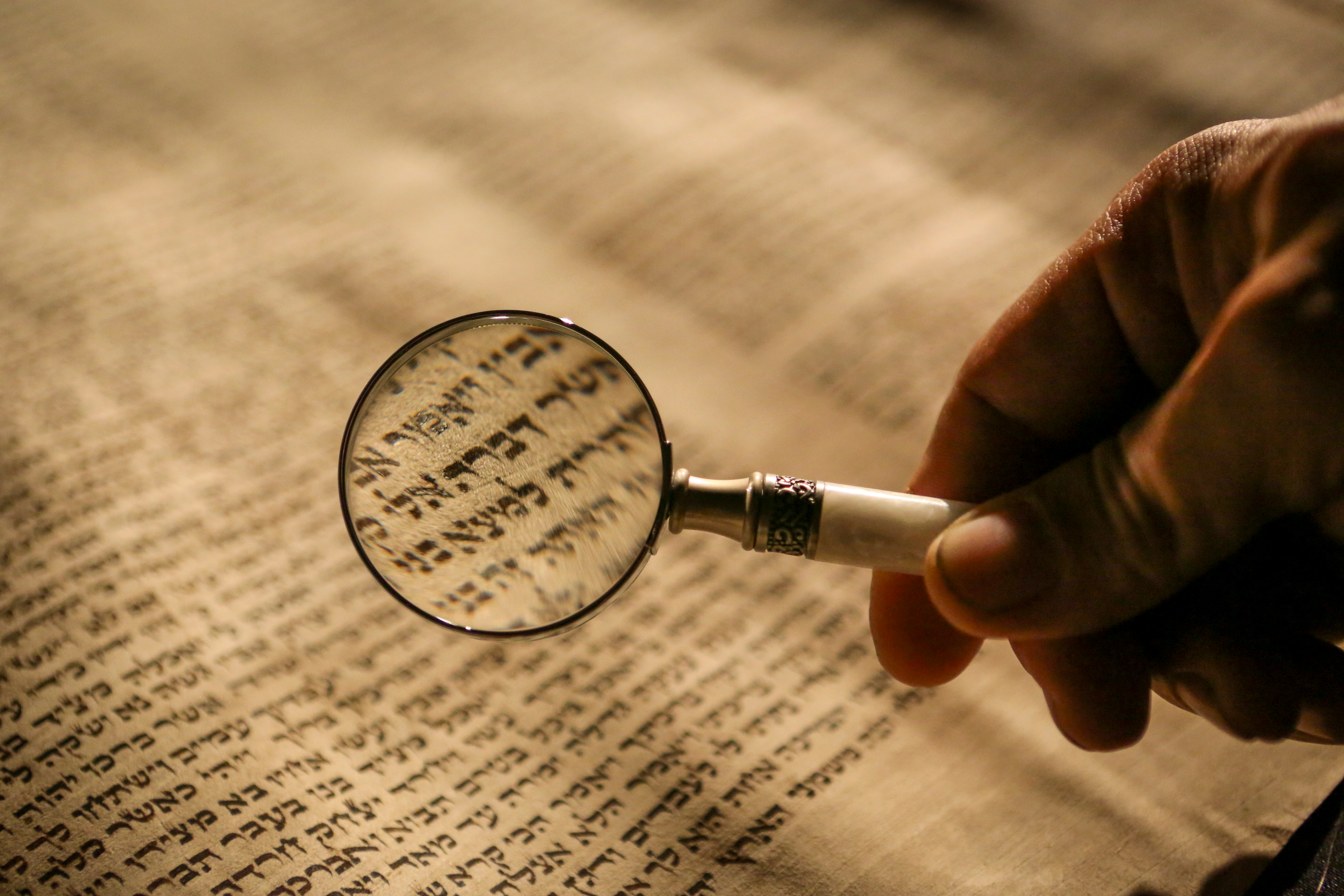
Photo by Mick Haupt on Unsplash

Filed Under: Uncategorized

Abraham, Part 9: Certified at Sodom

September 17, 2026 by Dan Olinger Leave a Comment

Part 1: Introduction | Part 2: Journey to Canaan | Part 3: Settlement | Part 4: Establishment | Part 5: Covenant | Part 6: Ishmael. Not. | Part 7: Implemented | Part 8: Isaac Promised

Here the story turns to what we might call certification: through two events God grows Abraham–sanctifies him, as we would say in a New Testament context–into the kind of person who can be an effective patriarch. The first of these is the destruction of Sodom and its aftermath, the outcome of Lot’s world-focused life.

The two angelic messengers, we learn, have come to rescue Lot from the coming fiery judgment on Sodom. As they head toward the doomed city (Ge 18.16, 22), God records his thoughts about Abraham. He has potential, God says, though he has a ways to go yet (Ge 18.17-19). God graciously recognizes and sets out to remediate his faults.

He tells Abraham that he is “investigating” whether to destroy Sodom for its sin (Ge 18.20-21).

Does he need to do that? Of course not; he’s omniscient. But he is displaying longsuffering, and justice (cf Ge 18.25!), and fairness. To call him “the angry Old Testament God” is a simplification worthy of ridicule.

What follows is the notable scene in which Abraham bargains with God for the deliverance of Sodom–and the pace of the narrative slows even more. Abraham finally gets God to agree that if there are just ten righteous people in the city, it will be spared (Ge 18.32). Abraham probably thinks that will be enough; we eventually learn that Lot’s family includes his wife (Ge 19.15), two unmarried daughters (Ge 19.8), at least two sons (Ge 19.12), and at least two married daughters and their husbands (Ge 19.14). That’s ten, at a minimum; that’s enough.

But the sons-in-law and married daughters, we eventually learn, are not believers; they are not “righteous” (Ge 19.14). They thought Lot was joking; so apparently Lot hadn’t laid a proper foundation with them.

But we’re getting ahead of ourselves.

For now, the negotiation ends at ten righteous–which will not in fact be enough.

The scene shifts to Sodom. The two angelic messengers arrive and find Lot sitting “in the gate” (Ge 19.1), possibly indicating a leadership position in the city (city council?). Lot greets them with hospitality (Ge 19.2-3), but at bedtime the men of the city demonstrate their depravity. Some have suggested that their great sin, and the cause of Sodom’s destruction, was their inhospitality and not their sexual proclivities. That seems to me, frankly, to be grasping at straws; Ezekiel later condemns them for their pride, arrogance, and neglect of the poor (Ezk 16.49), but also for “abomination” (Ezk 16.50), a word used routinely for homosexuality (Lv 18.22ff; 20.13; Dt 23.18; 1K 14.24), among other sins–but the other sins are not mentioned in this context.

Lot offers the mob his two unmarried daughters.

Yikes.

Some have tried to soften this by suggesting that Lot is attempting of shock the mob into coming to their senses. Others have suggested that since at least two of his daughters were already married to men of Sodom, Lot believes that the mob will not accept his offer.

But the text doesn’t say any of this.

The angels blind the lustful mob (Ge 19.11) and instruct Lot to get his family out of the city (Ge 19.12-13). As we’ve noted, his married daughters and sons-in-law refuse to leave (Ge 19.14); eventually the angels forcefully push the uncooperative Lot, his wife, and his two unmarried daughters out of the city (Ge 19.16) and toward nearby Zoar (Ge 19.22-23) just before the destruction comes (Ge 19.24).

Famously, Lot’s wife looks back, probably with regret (Lk 17.31-32), and is turned into a pillar of salt, in either a natural consequence of the fiery precipitation or a direct act of God (Ge 19.26).

In the aftermath we learn that Lot’s unmarried daughters aren’t “righteous” either, pursuing their father’s unwilling (drunken) assistance in giving them offspring–Moab and Ammon, whose descendants will be longstanding enemies of Israel.

Ten righteous? More like none righteous.

But this, too, is an oversimplification. Peter tells us that Lot was “righteous” (2P 2.7-8)–but clearly too much of this world.

I’ve noted earlier that Lot is a foil for faithful, if imperfect, Abraham. Here at the end he is bereft of any apparent righteousness, despite his kind hospitality to the traveling angel-strangers. Expositor Warren Wiersbe contrasts the two men:

“Christ Himself visited Abraham, but only the angels went to Sodom to visit Lot. Christ had a message of joy for Abraham and Sarah, but the angels gave a message of judgment to Lot. Abraham was visited in the daytime but Lot in the evening. Abraham was at a tent door; Lot at the city gate. Abraham had power with God but Lot had no influence even with his own family. Abraham saw Sodom destroyed and lost nothing, but Lot lost everything. Only his life was spared. Abraham brought the world blessing, but Lot brought trouble into the world (the Ammonites and Moabites).”

There remains one more event in God’s sanctification of the patriarch–and a puzzling one indeed.

Photo by Mick Haupt on Unsplash

Filed Under: Uncategorized

Abraham, Part 8: Isaac Promised

September 14, 2026 by Dan Olinger Leave a Comment

Part 1: Introduction | Part 2: Journey to Canaan | Part 3: Settlement | Part 4: Establishment | Part 5: Covenant | Part 6: Ishmael. Not. | Part 7: Implemented

Analysts of narrative tell us that when the narrator slows down the passage of time and relates the story in more detail, he’s at an important part of the story. And so Abraham’s story moves very slowly here. Gordon Wenham notes, “No other twenty-four-hour period in Abraham’s life is described more fully than this one.”

Abraham is living at Mamre (Ge 18.1), which is about 20 miles south of Jerusalem–although later place names aren’t really in place in these days.

We begin with a scene of hospitality, for which the Middle Eastern peoples are famous even today. Abraham is sitting in his tent door “in the heat of the day” (Ge 18.1); most cultures, including his, and ours before the days of air conditioning, didn’t do their labor at that time of day; they sat around and tried to keep as cool as they could, taking advantage of any available breeze and expending as few calories as possible. Abraham is sitting on the equivalent of his front porch when three men appear (Ge 18.2); do they appear suddenly, miraculously, or do they just amble down the road to him? The passage doesn’t say, but it’s clear that by the end of the conversation Abraham is aware that he’s talking to God himself (Ge 18.23ff).

Some church fathers thought that these three men were the Trinity, but in more recent times the predominant opinion has changed to divine Being and two angels. Since the Son is the only member of the Godhead who has ever been said to incarnate, I’m inclined to think that this is he. Three times here he is called YHWH, the LORD (Ge 18.1, 13, 17).

The hospitality begins. Abraham suggests washing the travel dust off their sandaled feet (Ge 18.4) and then offers them a meal, as one does to people who show up unexpectedly in places without any McDonald’s (Ge 18.3-5), and they accept. It takes a while, obviously; Sarah has to bake pita bread (Ge 18.6)–from “fine flour,” the “good stuff”–and a calf has to be slaughtered, dressed, and cooked (Ge 18.7-8)–and served with “butter,” probably something like our yogurt, mixed with fresh milk.

That’s pretty much an all-day affair. The drink probably came first, followed relatively shortly by the bread while they waited for the major course–which took a while.

It appears that Abraham doesn’t eat with them–probably because by midday he had already eaten. He stands respectfully and attentively nearby, ready to serve.

Scene 2.

After the meal, the men ask about his wife (Ge 18.9), notably using Sarah’s new name, not her given one. This is odd; in that culture a man doesn’t inquire about another man’s wife. One of the men, clearly the leader, changes Abraham’s whole world with a single sentence: within a year, Sarah will have a child (Ge 18.10). The child.

The Covenant is taking a major step forward.

The husband and wife react as you might expect under the circumstances (Ge 18.11). Sarah, who has apparently not heard this promise earlier, laughs in utter disbelief–and I’m not sure we can be too hard on her for that at this point. This laugh anticipates another one, of joy, later in the story (Ge 21.6-7) and will be the reason for this child’s name, Isaac, “laughter” (Ge 21.3-6).

The Man challenges her unbelief and repeats his statement (Ge 18.13-14). Sarah, now afraid, apparently because this Stranger has heard what she thought was her private amusement, denies that she laughed (Ge 18.15). But she did, and the Man knows.

It’s hard not to think of Mary, the mother of Jesus, at this point. She has as much reason to disbelieve her prophecy as Sarah does here. But despite her wonder (Lk 1.34), she believes, apparently immediately (Lk 1.38). And notably, her cousin Elisabeth, like Sarah, has conceived “in her old age” as well (Lk 1.36).

God works his plan here, as he will two millennia later, and as he does today.

Is anything to hard for YHWH? (Ge 18.14).

Photo by Mick Haupt on Unsplash

Filed Under: Uncategorized

Abraham, Part 7: Implemented

September 10, 2026 by Dan Olinger Leave a Comment

Part 1: Introduction | Part 2: Journey to Canaan | Part 3: Settlement | Part 4: Establishment | Part 5: Covenant | Part 6: Ishmael. Not.

I’ve suggested that Abraham has acted in good faith. But it turns out that he has not done the right thing. I suspect we’ve all experienced something like that.

God (here called YHWH, his personal, relational name), whose will is always done, acts to enlighten him, in the way he usually deals with him: direct revelation. And what a revelation it is.

God refers to himself as El Shaddai, “Almighty God.” He can do anything; he was not stymied by Sarai’s age, and he doesn’t need Abram’s help.

Commentator Gordon Wenham notes that this chapter is a chiasmus; God’s five speeches here are arranged in an ABCBA pattern:

A: Everlasting Covenant (Ge 17.1-2)
B: Renaming of Abram (Ge 17.4-8)
C: Sign of the Covenant: Circumcision (Ge 17.9-14)
B: Renaming of Sarai (Ge 17. 15-16)
A: Everlasting Covenant (Ge 17.19-21)

This is a thorough and artful restatement and implementation of the Covenant.

We’ve noted already that the Covenant is monergistic; God alone walks between the divided corpses. But he does expect something of Abram: “walk before me, and be perfect,” or blameless, spotless (Ge 17.1). How will he do this? By faith (He 11.8-10), as do we all. And he indicates that faith by worship (Ge 17.3).

To indicate Abrahm’s expanded role under the Covenant, God gives him a new name: Abraham, “father of a multitude” (Ge 17.5). And he reiterates the promises: many descendants (Ge 17.6), seed (singular!) (Ge 17.7; cf Ga 3.16), land (Ge 17.8).

Now God gives the sign of the Covenant: circumcision. This does seem odd to us, not to mention bringing up awkward questions in middle school Bible classes. Why circumcision?

The Bible speaks to this. I should note that circumcision was practiced across the Near East, but here God gives it a new significance. As circumcision is the cutting off and putting away of a piece of flesh, a visible part of the man’s generative organ, it serves as an external sign of an internal reality: the putting away of “the flesh,” our tendency to entertain what Paul calls “the old man,” our former selves, our fallen nature (Co 2.11). Note that the external type is not sufficient; if it doesn’t reflect an inner reality, it is meaningless. To an Israelite man it served as a daily reminder of his special standing before God and his responsibility to live it out.

Now God turns to Sarai and refreshes her name. Both “Sarai” and Sarah” (Ge 17.15) mean “princess,” but the latter is a newer form, by which God is reminding her of her standing in the Covenant and her role as the biological mother of the promised son (Ge 17.16).

Abram laughs. Most interpreters see this as a sign of astonishment and joy rather than the unbelief that we’ll soon see in Sarah. But I’m not so sure of that. Despite the repeated promise of Isaac, Abraham still wishes that the Covenant child could be Ishmael, whom he loves, of course, as his son (Ge 17.18).

But God’s plan is that Isaac will be the heir (Ge 17.19),. God makes a play on words here; remember the meaning of Ishmael’s name? “God hears.” And God says, “I have heard you” (Ge 17.20). Ishmael will prosper, having twelve princes (Ge 17.20; cf Ge 25.13-15). God knows Abraham’s fears, and he hears even misguided prayers.

This is now the fourth statement of the Covenant. What’s new here? Royal descendants (Ge 17.6, 16);Sarah as biological mother; and the land as an everlasting possession.

Next time, the story continues as the spotlight turns to Isaac.

Photo by Mick Haupt on Unsplash

Filed Under: Bible, Theology Tagged With: Abraham, biography, Genesis, Old Testament

Abraham, Part 6: Ishmael. Not.

September 7, 2026 by Dan Olinger Leave a Comment

Part 1: Introduction | Part 2: Journey to Canaan | Part 3: Settlement | Part 4: Establishment | Part 5: Covenant

Now established in the land, and thus largely at peace with the neighboring Canaanites, Abram, with the encouragement of his wife, decides to take this whole Covenant thing into his own hands. Genesis 16 is the next chapter in our saga.

The couple has their reasons (Ge 16.1-3). It’s been ten years, and Sarai Abram’s wife still has not had a child. She, too, feels the pressure of the relentlessly ticking clock. She notes that she has a young female servant, named Hagar, for whom bearing a child would be a natural function (Ge 16.1). She recommends that Abram have the promised son by her (Ge 16.2-3).

This strikes us as, well, odd. What wife would recommend that her husband sleep with an employee?

As it happens, this practice, too, is mentioned in the Nuzi texts, as well as in Hammurabi’s law code (145-46). Having children, a posterity, was viewed as a necessary thing. It was also viewed as the sole responsibility of the wife–their knowledge of biology being incomplete. If a wife could not bear a child, she was obligated–obligated–to find a woman who could bear in her place. That child would then be the wife’s legal offspring.

So Sarai does what’s expected, though, as we shall see, she’s not completely at peace with the idea. And Abram goes along with this culturally “normal” plan (Ge 16.4). After all, the Covenant had not specified that Sarai would be the mother of the child (Ge 12.2; 13.16; 15.18). This solution seems obvious.

Hagar conceives, and as an Egyptian, steeped in the culture of the Middle East, she “despises” Sarai, the culturally disgraced barren woman (Ge 16.4). Sarai, of course, finds that outcome doubly humiliating (Ge 16.5).

What happens next displays the inherent irrationality of polygamy. Of course the two women aren’t going to get along. Sarai mistreats Hagar, who takes off (Ge 16.6). She is found “on the way to Shur” (Ge 16.7), which indicates that she’s headed for her home in Egypt.

And here we have the first biblical mention of “the angel of the LORD” (Ge 16.7), a key figure in the theology of the Old Testament. He greets her by name and calls into question her decision to flee (Ge 16.8). In so doing he calls her “Sarai’s servant.” This is significant. Hammurabi’s code would have made her Abram’s primary wife, as the one with a child. The angel reverses that: “You’re still a servant. You have no right to leave.” Hagar admits as much by calling Sarai “my mistress.”

So the angel orders her to return (Ge 16.9). And then it becomes clear that this is no mere angel (“messenger”) of God. He now speaks as God: “I will multiply thy seed” (Ge 16.10). Yet he immediately speaks of God in the third person: “The LORD has heard your affliction” (Ge 16.11).

How can this person be God, yet distinct from God?

We’ll have to wait for the New Testament to give us the information we need to answer this question.

Note that the angel names the child: Ishmael (Ge 16.11): “God hears.” He will not be the promised child of the Covenant (Ge 16.12).

Hagar responds rightly, demonstrating that she is grateful for God’s seeing her quandary; she names the well “the well of the one who lives and sees me” (Ge 16.14). I find it interesting that the angel’s emphasis is on God’s “hearing,” while Hagar’s is on his “seeing.” In this case, they’re essentially the same thing.

Hagar clearly communicated the angel’s message to Abram when she returned; he names the boy as she was instructed by the angel (Ge 16.15).

Hagar has acted rightly in all this–other than “despising” Sarai after her conception.

Given what we’ve seen, I think it’s a mistake to see Abram’s action here as faithless. He is acting on what he knows–that he’s going to have a son (by whom is so far not specified). His ten-year wait indicates that he has reason to believe that his wife is not going to be the mother; perhaps the Lord is expecting him to take responsibility and act to bring the promise to pass.

He’s a wealthy man, with a large (mobile) estate to administer; it’s reasonable to assume that he’s a man who takes responsibility and acts to accomplish his ends.

So he does.

Next time: God corrects his thinking.

Photo by Mick Haupt on Unsplash

Filed Under: Bible, Theology Tagged With: Abraham, biography, Genesis, Old Testament

Abraham, Part 5: Covenant

September 3, 2026 by Dan Olinger Leave a Comment

Part 1: Introduction | Part 2: Journey to Canaan | Part 3: Settlement | Part 4: Establishment

We are now in the central stage of Abraham’s life: the formal presentation and confirmation of the Covenant. This is the first of three major covenants executed in the Old Testament: the Abrahamic, the Mosaic (Ex 19.17ff), and the Davidic (2S 7.12ff). (A fourth, the New Covenant, is predicted in Jeremiah 31.31ff, but not executed until the Last Supper [Mt 26.28].)

As we’ve seen, the Abrahamic Covenant has been initially announced earlier, in Genesis 12, but we find the full statement and ratification here in Genesis 15. Commentator Kenneth Mathews (the New American Commentary) writes, “In its immediate context, the chapter depicts the patriarch as the recipient of a divine bequest, modeled on a royal gift, which follows on his encounter with the kings (chap. 14).”

The chapter introduces the Covenant topic with a conversation between Abram and God in which Abram reminds God that he still doesn’t have any offspring (Ge 15.1-6). In the first announcement of the Covenant, God told Abram that he would become a “great nation” (Ge 12.2), which certainly implies a large number of descendants, and the second announcement makes the idea more explicit with the “dust of the earth” analogy (Ge 13.16).

Now Abram observes that he still has no offspring (Ge 15.2-3). In fact, he has followed the cultural custom of legally adopting an adult male to provide care for the aging childless couple when they need it, in return for inheriting their estate (Ge 15.2-3). (This custom is attested in the Nuzi documents, which are dated in Abram’s time.) https://cojs.org/nuzi_archives/

I don’t see Abram’s question as unreasonable, or evidence of lack of faith; it’s been close to ten years since Genesis 12 (Ge 12.4; 16.3), and at age 85 Abram doesn’t know how much time he has left.

God responds by repeating his earlier promise and clarifying it: first, Abram’s offspring will indeed be biologically his (Ge 15.4), and second, God provides a second metaphor. He had said his seed would be like the dust of the earth (Ge 13.16); now he compares it to the stars (Ge 15.5). Keep in mind that there was no light pollution in those days; even without telescopes, Abram’s view of the heavens would present an astounding number. Any readers living in Death Valley, or North Korea, can confirm that.

What follows is one of the most important verses in the Bible for the doctrine of salvation: “And he believed in the LORD; and he counted it to him for righteousness” (Ge 15.6). Paul cites this verse as evidence that salvation has always been by faith, since here the Mosaic Law didn’t even exist (Ro 4.3ff; Ga 3.6-14).

Now comes the formal enactment of the Covenant (Ge 15.7-21). (Note the parallel language between Ge 15.7, initiating the Abrahamic Covenant, and Ex 20.2, initiating the Mosaic.) In a ceremony that seems strange to us, following God’s instruction (Ge 15.9), Abram slaughters several animals and cuts them in half (Ge 15.10), and God, in the form of a smoking lamp, walks between the pieces (Ge 15.17). In that culture this was the form of a solemn covenant; the parties would walk between the halves of the animals, with the implication that this kind of death will come to one who breaks the covenant (Jer 34.18-19).

Note that Abram does not walk between the animal pieces; only God does. God places himself under the threatened death penalty if he breaks the covenant. The point is clear: God cannot die; the covenant cannot be broken. We call this a monergistic covenant; only one of the parties is bound by it.

During this ceremony God prophesies the future. “God’s timescale for the fulfilment of his promises was a long one. Abram was losing patience that little had happened in the ten years … that had elapsed since the promise was first made, but God was thinking in terms of 400 years (13)” (Gordon Wenham, The New Bible Commentary, 72). This is a round number; the actual length of Israel’s stay in Egypt was 430 years (Ex 12.40).

God’s prediction of the exile in Egypt shows that it was always his intent, and here he gives the reason: he is giving the pagan Canaanites, who are already under a curse (Ge 9.25), a full four additional centuries to repent, demonstrating that he is “slow to anger” (Ps 103.8) and ameliorating the charge of genocide when the eradication of the Canaanites finally came.

Next time, Abram tries to help God fulfill the covenant.

Photo by Mick Haupt on Unsplash

Filed Under: Bible, Theology Tagged With: Abraham, biography, Genesis, Old Testament