Dan Olinger

"If the Bible is true, then none of our fears are legitimate, none of our frustrations are permanent, and none of our opposition is significant."

Dan Olinger


Retired Bible Professor,

Bob Jones University

home / about / archive 

Subscribe via Email

Why Creation Matters, Part 8: Minor Prophets 

March 26, 2026 by Dan Olinger Leave a Comment

Part 1: Introduction | Part 2: From the Beginning | Part 3: The Flood | Part 4: The Sabbath | Part 5: Deliverance | Part 6: Isaiah  | Part 7: Jeremiah  

What we call the Minor Prophets the Hebrew canon calls The Book of the Twelve, a single book in the Latter Prophets with Isaiah, Jeremiah, and Ezekiel. Within this book I’d like to focus on 3 Creation passages, 1 each in Amos, Jonah, and Zechariah. 

Amos 5.8 

Amos is one of the earliest of all the writing prophets. He is writing to the Northern Kingdom of Israel, calling them to confess and repent of their sins in light of the coming invasion by Assyria. He begins chapter 5 by predicting their downfall (Amos 5.2), a literal decimation (Amos 5.3). He gives them yet another chance to repent (Amos 5.4-6), culminating with a reminder of God’s great power to do all his will: 

Seek him that maketh the seven stars and Orion, 
And turneth the shadow of death into the morning, 
And maketh the day dark with night: 
That calleth for the waters of the sea, 
And poureth them out upon the face of the earth: 
The LORD is his name: 
9 That strengtheneth the spoiled against the strong, 
So that the spoiled shall come against the fortress (Amos 5.8-9). 

As we’ve seen earlier, God here presents not only his power to create (the seven stars and Orion), but his power to direct both cosmic (day / night, sea / land) and political (spoiled [looted] / strong) forces. 

The God who can—and does—do these things can both overwhelm the unrepentant in judgment and deliver the repentant. 

Jonah 1.9 

Jonah, writing at roughly the same time as Amos, demonstrates the truth of his prophetic colleague’s words by his own actions—and disobedient ones at that. 

Jonah rejects God’s command to preach the destruction of Nineveh—as we later learn, because he knows that God will forgive those who repent (Jonah 4.2)—and purchases a boat fare in the other direction, to Tarshish. God then hurls a storm upon the Mediterranean, one so fierce that seasoned sailors believe they’re done for. They cast lots to determine who is being judged by the storm, and the lot falls to Jonah. When they ask him for an explanation, he replies, 

I fear [worship] the LORD, the God of heaven, which hath made the sea and the dry land (Jonah 1.9). 

The God who created the sea, and separated it from the land—boy, would these sailors love to bring them back together right now!—can bring overwhelming judgment. But, Jonah says, he will also deliver them if they obey him. 

Just what Amos said. 

Zechariah 12.1 

The Creation theology of the Hebrew Scriptures ends* on a positive note. Zechariah is a post-exilic prophet, an exact contemporary of Haggai. Both of them worked together to encourage the returned exiles from Babylon to rebuild the Temple, initiating the Second Temple Period. A major theme in both prophets is the blessing and even glory that lie ahead for God’s people in Jerusalem. 

Here Zechariah describes God as the one who 

stretcheth forth the heavens, and layeth the foundation of the earth, 
And formeth the spirit of man within him (Zec 12.1b). 

To these returnees, who have been rebuilding the Temple, Zechariah speaks of a God who knows something about laying a foundation and using a measuring line, who has invested mankind with his very breath (and thereby his image [Gen 1.26-27]), will take notice of their obedience in building and will demonstrate his love for them by blessing them in the days ahead. He even looks ahead to the day when the Shepherd will be smitten and the sheep will be scattered (Zec 13.7), and beyond even that to the Day of the Lord, when his feet shall stand on the Mount of Olives (Zec 14.1-4), and God will usher in a day when “every pot in Jerusalem and in Judah shall be holiness unto the LORD of hosts” (Zec 14.21). 

All will be well, because the God who began it all, powerfully and intelligently, will bring it to his benevolent and designed conclusion. 

Creation matters. 

* Malachi makes a brief reference to Creation (Mal 2.10) as the unifying basis for God’s covenant people—a fitting closure to the Older Covenant. 

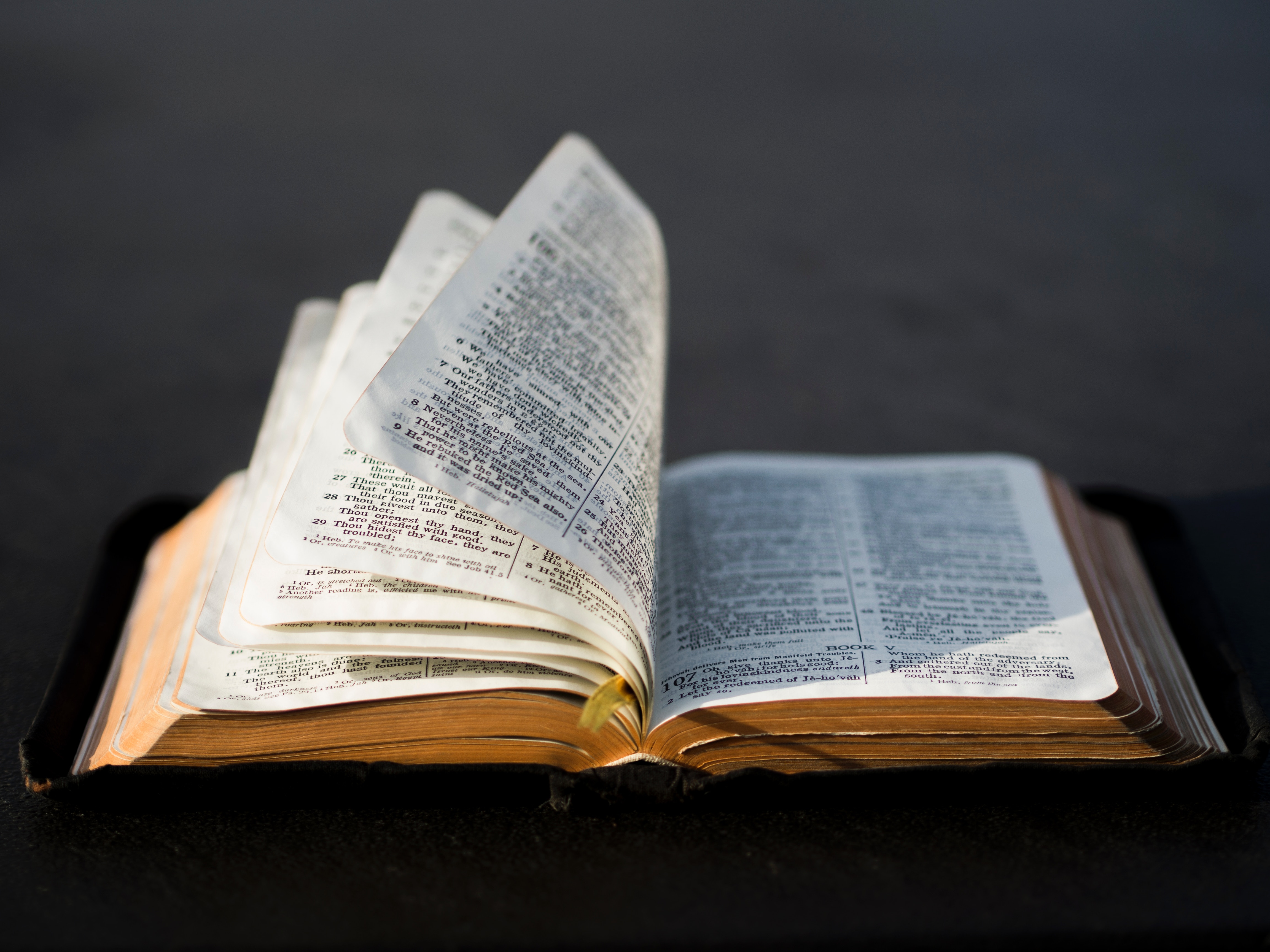
Photo by Greg Rakozy on Unsplash

Filed Under: Bible, Theology Tagged With: Amos, creation, Jonah, Malachi, Minor Prophets, Old Testament, systematic theology, theology proper, works of God, Zechariah

The Really Important Bible Story That Hardly Anybody Knows About, Part 1

November 12, 2018 by Dan Olinger 1 Comment

There’s a standard set of Bible stories that we grow up hearing in Sunday school. In the Old Testament, Adam and Eve; Noah; Abraham, Isaac, Jacob, and Joseph; Moses and Joshua; maybe a judge or two; David and Solomon; Elijah and Elisha; Daniel.

We know that Judah went into captivity in Babylon, and we hear how Nehemiah rebuilt Jerusalem’s walls afterwards, but everything in between is kind of fuzzy.

It shouldn’t be.

Ezra begins with the story of Cyrus, who had conquered Nebuchadnezzar and the Babylonians, announcing that any peoples conquered and displaced by the Babylonians could return to their homeland. Apparently he figured that conquered peoples might be less prone to rebellion if they were happy. Quite an enlightened despot, he was.

Well, that meant that the Jews could go home.

Relatively few of them did (42,360 [Ezra 2.64]). That seems surprising until you realize that most of the Jews in Babylon by that time had been born there; the last deportation had been 50 years earlier, in 586 BC. No reason to go to a city they’d never seen—which, incidentally, was in ruins and had been for 50 years.

The leader of those who did return was named Zerubbabel, the grandson of the last Davidic king, Jechoniah, who had been cursed by God (Jer 22.34ff) along with his descendants. So Zerubbabel is not going to be king, even if Cyrus would hear of such a thing. He’s the governor.

The returnees arrive in Jerusalem (Ezra 1.11), and the first thing they do is rebuild the altar (Ezra 3.2). It’s easy to see why they did this; their Law said that there was no forgiveness of sins without blood sacrifices (Lev 17.11), and it also said that sacrifices could be offered only at the Temple site, where God had placed his name (Dt 12.11). For the 50 years since the Temple had been destroyed, there had been no blood sacrifice, and thus, as far as they knew, no forgiveness of sin.

So they build the altar first, on the site of the old Temple, and the blood flows once again. There is peace with God.

Then they begin reconstruction of the Temple itself (Ezra 3.8). But they’ve gotten no further than laying the foundation when they run into political opposition from the locals (Ezra 4), and the work stops (Ezra 4.24) until the second year of Darius—a 16-year hiatus.

So for 16 years the priests lead animals out into the center of the vacant lot where the Temple used to be, and on the altar, under the open sky, amid the rubble, they slaughter and sacrifice them. The proper place, all right, but hardly a fitting one for sacrificing to the God of heaven.

During those 16 years the residents of Jerusalem aren’t idle. They rebuild their houses, plant their gardens, and do all the other work necessary to establishing a normal life in the long-abandoned land. They even have time to raise their standard of living by paneling their houses and decorating them far beyond simple functionality.

While dust swirls, and rain falls, and animals crawl over and around the naked altar where God meets his people.

After 16 years of this—God is patient—two prophets come to Jerusalem to reorient the people’s priorities. Their names are Haggai and Zechariah. We know little of either of them beyond their names and the fact that they prophesied. Haggai’s brief book consists of four sermons he preached in 520 BC, sermons that led to the reconstruction of the Temple and the refocusing of the spiritual life of Judah.

The sermons are preached over a period of just less than 4 months. The specific date for each sermon is given—which means that Haggai is the only book of the Bible for which we know the precise date(s) of its writing.

Every good sermon has a clear and concise theme, or what you might call a thesis statement, that the hearers can take away and put into action immediately. Haggai’s sermons are no exception.

The next 4 posts will explicate each of these four sermons—and you’ll find that their themes, their directives, are as timely today as the day they were preached.

Part 2 Part 3 Part 4 Part 5

Photo by Aaron Burden on Unsplash

Filed Under: Bible Tagged With: Ezra, Haggai, Old Testament, Zechariah